


Capturing Serenity: Street Photography in a Quiet French Coastal Village
Street photography is often associated with the energy of bustling cities, but what happens when you take your camera to a quiet coastal village? In this blog, I explore the unique challenges and rewards of shooting in a slower, more secluded environment. From capturing local life to finding compelling compositions, this was a test of patience and observation. Watch the full video to see how I approached storytelling in this peaceful setting!
If you enjoy reading about my experience capturing the charm of this quiet French coastal village, you won’t want to miss the full video! In this episode of How I See It, I take you behind the scenes as I navigate the unique challenges of street photography in a slower, more secluded setting. Watch the video [here] and see how I approached composition, light, and storytelling in this picturesque location. Let me know your thoughts in the comments!

Recently, I ventured into one of these serene coastal villages to challenge myself and my street photography skills. Here's what I learned about the unique beauty and challenges of shooting in such a tranquil setting.

Blending In
In a small village, you’ll often stand out as an outsider. Your presence might make people more conscious of being photographed, which can disrupt the authenticity you’re trying to capture.

Techniques for Success

Use Light to Your Advantage
Coastal villages are often blessed with stunning natural light. Early mornings and late afternoons can provide dramatic shadows, golden hues, and reflections in the water. Let the light guide your compositions.Slow Down and Observe
Without the chaos of a city, you have more time to explore and immerse yourself in the environment. Pay attention to textures—the weathered wood of fishing boats, the rough stone walls, or the smoothness of seashells on the shore.Engage with Locals
A small village offers the unique opportunity to connect with residents. Striking up a conversation might lead to discovering hidden spots or gaining permission to photograph someone in their everyday environment.

The Challenges of Quiet Streets
Street photography is often associated with bustling urban environments—crowded markets, busy streets, and the constant ebb and flow of humanity. But when you step into a quiet French seaside village, the rules of the game change. The rhythm slows, the streets empty, and you’re left with a different kind of canvas.

Fewer Subjects, Less Action
In cities, you can rely on the natural movement of people to create dynamic compositions. In a quiet village, finding interesting subjects requires more patience. People are fewer, and their movements are often slower and more deliberate.

Stillness vs. Storytelling
Capturing a story in a setting where everything feels still is a challenge. You’ll need to focus on subtler narratives—the way a fishing net is coiled, the way light hits an old wooden door, or the interplay of shadows on cobblestones.

Finding Stories in Stillness
What I found most rewarding about shooting in a quiet French seaside village was the need to adapt my vision. Instead of chasing movement, I sought out tranquillity. I looked for visual poems in the way the village interacted with its surroundings: the sea, the sky, and the wind.
One of my favourite images from the trip was of an elderly man slowly pedalling on the hard sand of the deserted beach, the ocean as his backdrop, as he went seeking mussels. His posture, combined with the empty horizon, spoke volumes about the simplicity and depth of life in such a place.

Final Thoughts
Street photography in a quiet coastal village is a lesson in mindfulness. It pushes you to appreciate stillness and find beauty in what might initially seem uneventful. It’s a reminder that every place has its stories; you just need to listen closely and look deeply to uncover them.
Next time you’re in a place where the streets seem silent, don’t be discouraged.
Embrace the quiet, and you might just capture something extraordinary.


How I see it - a YouTube video channel
Launching my Street Photography Channel - “How I See It.”
Future plans and how you can help.
A couple of days ago I published my first YouTube video. My hope is to create videos that I would like to watch – just as photography allows me to capture the pictures I want to see.
If these videos resonate with anyone else then that would be incredible. I don’t claim to know it all, or even to have any answers. I am not an expert. I’m an amateur photographer taking pictures with a passion and I’m learning all the time.
How I See It - launching my new street photography video channel
In fact, launching the channel has taught me a lot in a short amount of time. I'm happy to share my opinions and insights, and, if that’s Teaching then I’m fine with that. After all, teaching has been my profession. I know that teaching something is the best way to learn it effectively. I've gained a lot of knowledge from making my first video and hope it will be helpful to others too.
I’ve called this Channel “How I see it.” It is precisely that – how I see things. I'm not claiming any universal truths or expertise other than the experience I've gained from ten years of street photography. I'll undoubtedly make mistakes along the way, but that's how we learn.
In that spirit, I hope that those who follow along will offer their thoughts and comments as we go. If you want to point out diversions, shortcuts or wrong turns then we can all learn together. And if you have ideas for future episodes please feel free to share them by dropping me a line or leaving a comment below each video.

Seven Up - Best of 2023

I’ve always believed that it’s best to leave your images for sometime before processing them. You might call it letting them marinate. And I suppose that the same principle applies to this post because I’ve left it several months into 2024 to reflect on my images from 2023.
The images I’ve chosen are a combination of the ones that had the most likes on Instagram and a few of my own favourites. You will notice that these are all colour. I did have one or two black-and-white images that I wanted to include. However, they looked out of place within the overall feel of the colour gallery. There may well be a follow up post of black and whites.
With each image, I’ll try to give you an idea of how the image came to be. Not so much about meta data, but more about how I came to see the image as I did – the moment, the perspective, the point of view, and, perhaps most importantly, the feeling I was trying to put across at the time.
No Use.
Cambridge, England. November 2023
Leica M11. 28mm.
No use.
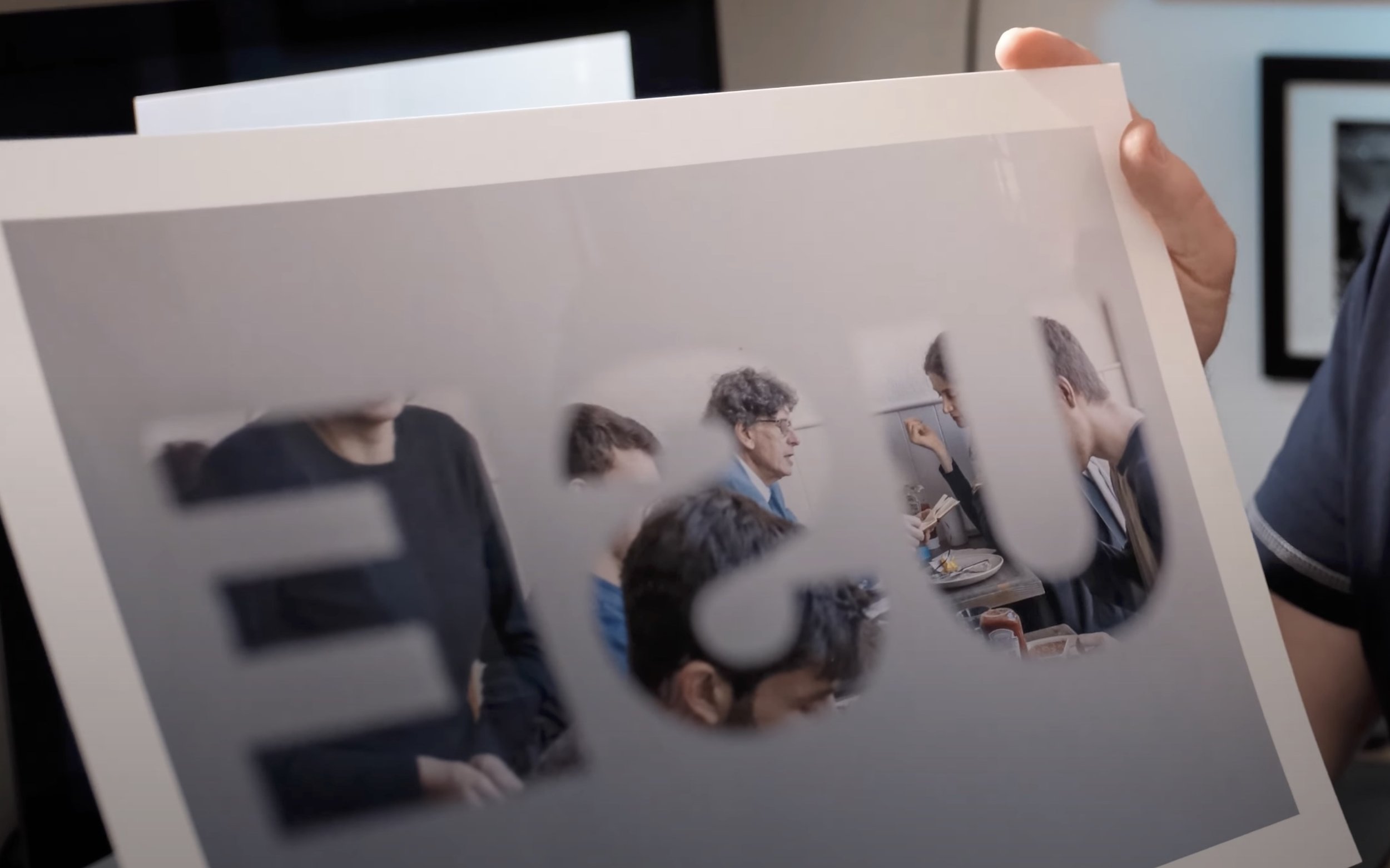
This may be my favourite image of last year because I’ve never actually seen anything quite like it. I do like using frames in my images. However, these tend to be fairly typical or obvious frames such as windows, doors or the side of a lamp post or an edge of a building to close off one side of the image. This was actually the reverse side of the cafe sign and I took the opportunity to shoot through the letters.
Inevitably, you will be wondering what the sign was. This was taken at the copper kettle, a very well-known café opposite Kings College in Cambridge. this is the reverse side of the entrance and the sign, reads restaurant and coffee house (or something like that). it was very much a spur of the moment shop; I hadn’t gone looking for it, I’ve never noticed it before. It was simply an opportune moment as I left the café.
As is so often the case, the café was full. Fortunately for me, on this occasion, it was filled by people wearing complementary shades of blue and grey which also resonated with the frosted grey blue glass of the window. Not only that, but the bright yellow of the butter on the plate on the right hand side, complements the blues beautifully everyone in the image, appears to be either engrossed in their food, or in conversation, No single person is shown fully, but each is impacted by the opaque frame. the frame itself, the letters ES and U in reverse also invite the question as to what they spell out.
To me, this is what street photography is all about– noticing things that are seemingly hiding in plain sight, making something every day noticeable and beautiful.
Very Tempting.
More London, London. June 2023.
Leica M11. 35mm.
Very Tempting.
This image is connected to the previous one by being shot at a café. Whereas inverted commas no use “was shot on the exit from the café, this image was shot while enjoying the coffee on a sunny Sunday morning in June. As far as I’m concerned, from the moment I’ll leave the house until I return the camera stays by my side, and every second is a chance to make an image. Resting my legs, enjoying a flat white and a cheeky croissant can only improve the photographic experience.
This is an area of London That has changed hugely in the last few decades. Just off Tooley Street, new buildings of chrome steel and glass have replaced the Dickensian warehouses alongside the Thames of two centuries ago. it’s an area that is fun to shoot in all kinds of light and weathers. However, it is also prone to the over officious security guard and so shooting with a small bodied camera is recommended. Walking around with a fistful of DSLR always seem to get me, stopped and moved along. With the rangefinder no one seems concerned.
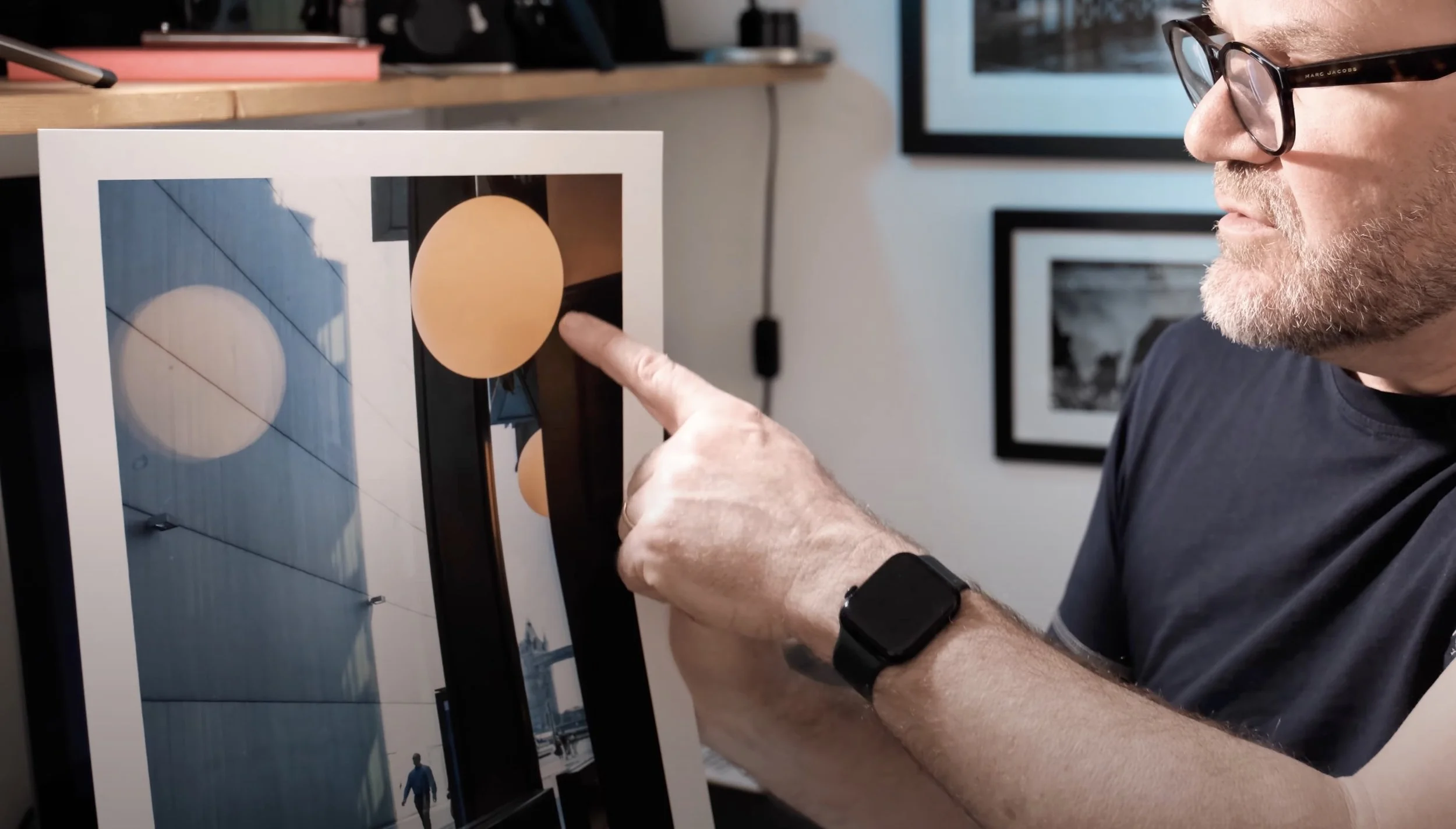
With one eye on the street, I will often choose to sit in the window in a café. I think I had to shuffle myself along a few times in order to give myself a view of Tower Bridge while also maintaining a clear view of that column of bright light. It’s always good to include a view of a landmark to give the viewer summit information about where the image was taken. This isn’t a photo about Tower Bridge, but I like the fact that it’s a small part of the frame. This pedestrianised area can get very busy and it wasn’t as quiet as perhaps it seems. Waiting for a solitary figure to frame themselves against that almost white background. Without anyone else in the frame took some time. It would have been cleaner without the small huddle of three people in the right hand frame moving towards the bridge – you can’t have it all.
The words “very tempting” on the sign at the bottom of the image, give the image its title. But I can’t help but wonder if they are a distraction. Of course, I could have removed them in post processing. However, that goes against the grain with me – if it’s in it stays in.
Part of what makes the image work for me, is the combination of straight lines in the geometry of the buildings, the shadows with the diagonal light of the windows, showing on the building ahead, and the curves of the lamps of the café, as well as the reflection. It’s almost as if there are three suns in a kind of Star Wars way. The blue tones of the morning complement the warmth of the sun and the globe lighting well. In fact, I initially posted this image in black-and-white, and it was more successful in terms of likes on Instagram than this colour version.

Lake Michigan Rails.
Chicago, Illinois. August 2023.
Leica M11. 35 mm.
Lake Michigan Handrails
A blazing hot day, lakeside in Chicago; the harsh concrete platform, and the bright red handrails contrast beautifully with the inviting blue of Lake Michigan. Here, the beauty of the lake is only approached via the concrete jetty and the bright red handrails. The natural environment harshly butts against the man-made. It is partly this contrast that appeals to me.
In a more abstract way, I love the rectangles made by the two sides of the red handrail and the corresponding diamond, lozenge shaped shadows on the concrete. Similarly, the way the top of the handrails lineup with the horizon is aesthetically very satisfying.
There will be those that argue that this is not street photography. To me, street photography can be taken anywhere– in the street, on the beach, in the subway, at the airport, hey, even on the moon. The essential elements are that the image is candid and that there is evidence of human intervention.

Veil Descending.
Toronto, Canada. Aug 2023.
Leica M11. 24 mm.
Veil Descending
In a way, this image is more typical of the way I shoot. If there is such a thing as a contact sheet with digital images, you would see that this image is a one off. I was not working the scene; there was no image like this before or after it. It exists on its own.
To me, this is the real thrill of street photography – coming across a one-off moment or instance, which is gone in a flash (no pun intended). This was taken at the Art Gallery of Ontario in Toronto. It’s a magnificent building and, on an August afternoon, gorgeous, warm light floods the space. Rounding a corner on one of the walkways I came across this scene. I quickly brought the camera to my eye and did my best to frame all the converging lines of the arches as best I could.
The warm tones of the wood and the sunlight, the purity of the museum walls, and the main characters outfit beautifully complement the turquoise veil.
I find that the more I look at this picture, the more I see. It’s a complex mix of lines and light, shadows and curves and diagonals. It all takes place within the arch and there’s an inner arch which gently skirts the side of the outer arch. To capture the woman in the centre of the arch was almost entirely down to luck. The time it took her to move through what is probably less than 10 feet of that stairwell was just enough to get my one shot. If you look closely, there is another figure observing the scene from a window above. I think I wish she wasn’t there, but that’s street photography.

Swallowed.
London Waterloo. Sept 2023.
Leica M11. 28mm.
Swallowed
This is London Waterloo station, where the light at certain times of day is stunning, especially now that the old Eurostar rail terminal has been repurposed as additional platforms. Golden light pours down onto the lower concourse
Here, the shadows have a personality of their own, a dark, looming presence , which almost seems to chase the solitary figure from the scene. He’s clearly not hurrying, he’s being drawn into the subterranean safety of the London underground system. It makes me think Bill Brandt’s images of Londoners sheltering on the platforms during the Blitz in 1940.
Perhaps this is the last leg of our chap’s journey as he leaves behind the vestiges of his day, or maybe he’s heading out for an evening with mates. Either way the dark looming presence will soon be left behind. Maybe the poster asking “how did we do?” is calling him to reflect at the end of his working day.

A Shade After Twelve.
London. Dec 2023,
Leica M11. 50 mm.
A Shade After Twelve
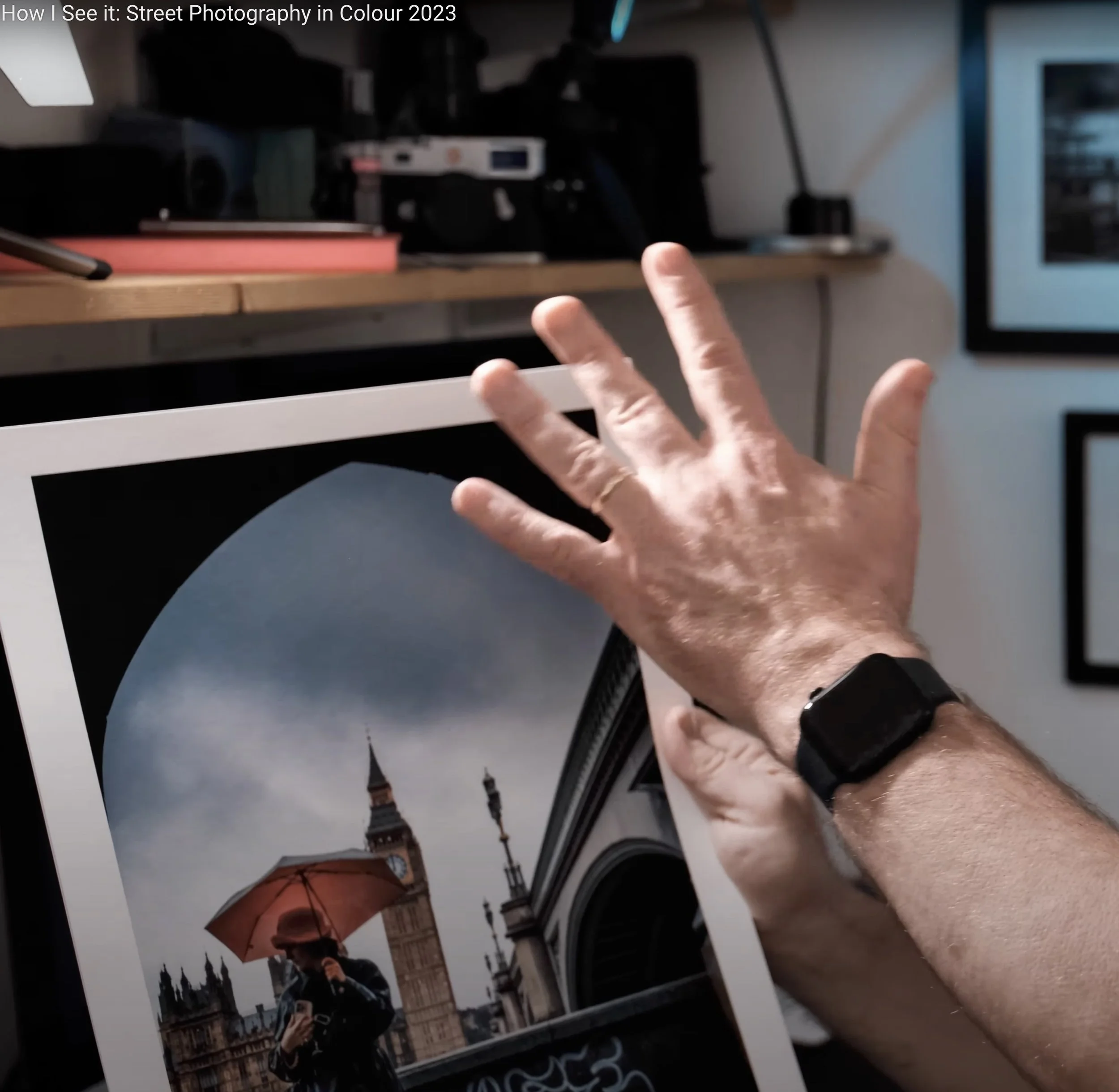
This image was one of several I took within a very short space of time. I like them all, though mostly I prefer them in black-and-white. One showed just the architecture - the parliament building, Westminster Bridge, the Elizabeth Tower, and the arch, which frames them all. The modern graffiti contrasts sharply with the classical Victorian architecture in the distance. I have to assume the architecture will outlast the modern art. Another image was filled with tourists, umbrellas up, photographing the same scene without a thought for me who had been standing there all along – never mind, they actually improved the scene, as is so often the way. The image I’ve chosen makes the most of the individual and her red umbrella under that gunmetal sky.
The three different images were clearly taken within seconds of each other as the hands of the clock show. This one was taken just moments after midday - enabling me to use the pun a shade after twelve.

Time Stands Still.
London Underground. October 2023.
Leica M11. 28mm.
Time Stands Still
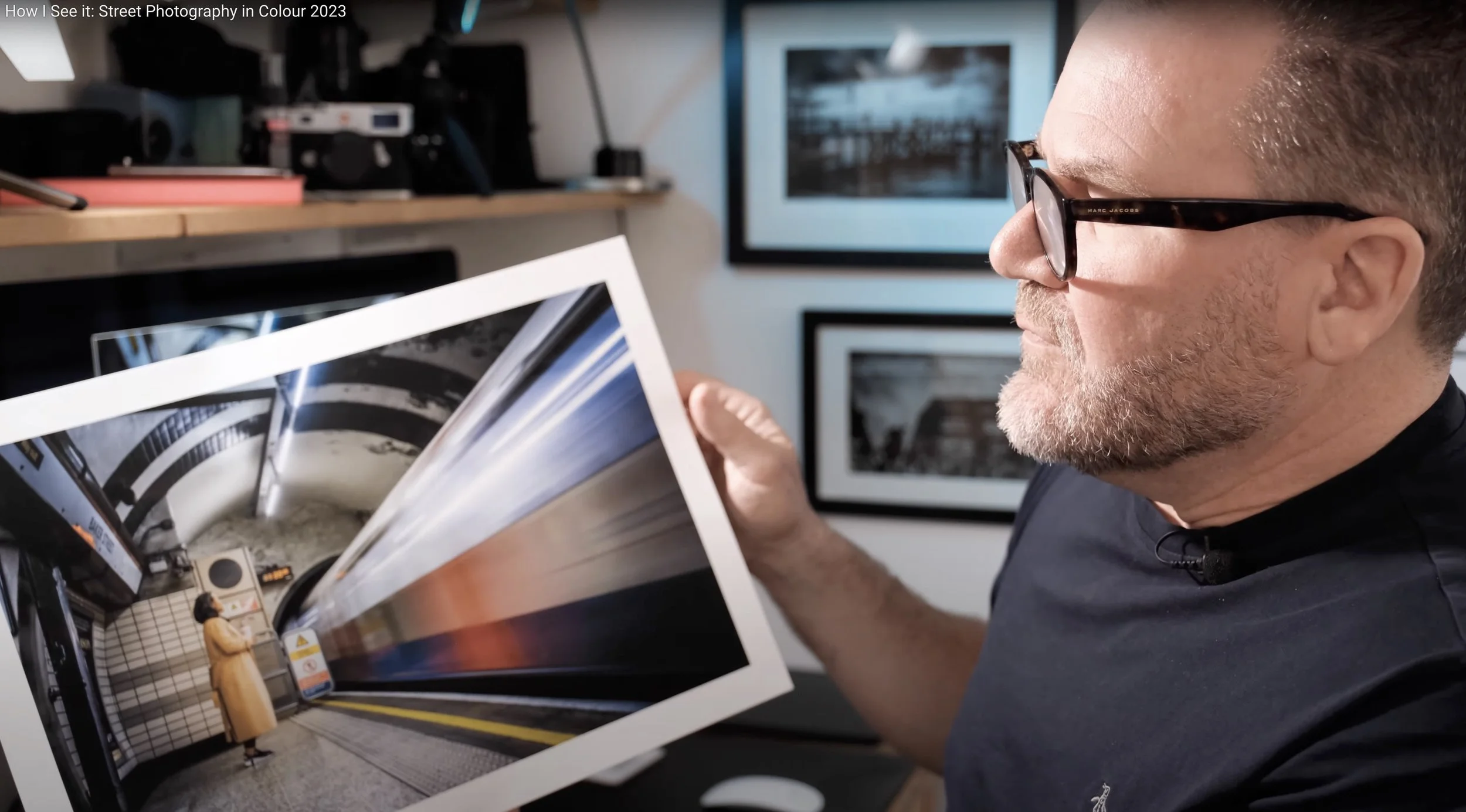
Baker Street has to be one of the most photographed tube stations. This is not the classic view and could’ve been taken in almost any of the hundreds of London Underground stations. I am always drawn to shooting on the tube. It’s not just that each station is different and has its own style. It’s not just the beautiful curves of the ceilings on the platforms and how they intersect with the straight lines of the track and the markings. For me there is a real thrill in taking photographs of people in an environment where you can easily be spotted or found out.
On the platforms, and even more so on the trains themselves, people are huddled close together for a concentrated slice of time. Everyone is waiting for the same thing – the train to pull in, the train to pull out, and for the train to reach its destination. For an intense time, everyone shares the same experience and there’s no escape if you are caught.
I went for a slow shutter speed and held steady - always a challenge in a rangefinder without image stabilisation. Luckily, the solitary passenger didn’t move as the train pulled in, enabling me to catch the moving train, while everything else is frozen still. I like the warm tones of the woman and her coat which compliment the cooler blues of the train as it moves through.
I’d love to know your thoughts. Let me know in the comments.
Oh… and happy New Year!
Mouthpiece 3: On The Dotted Line - going behind the image
The streets aren’t paved with gold but the warm fluorescent glow spilling onto the wet flagstones like Chablis are a damn close second on this winter’s night in Soho. The deep blue-black of the sky only accentuates the staccato blasts of the neon signs trumpeting reds, pinks and oranges.
If it’s only Mad Dogs and Englishmen that go out in the midday sun, then maybe it’s just drunks and street photographers who stay out on nights like this. Fingerless gloves clutch numbly at the small black box, somehow adjusting dials without feeling them.
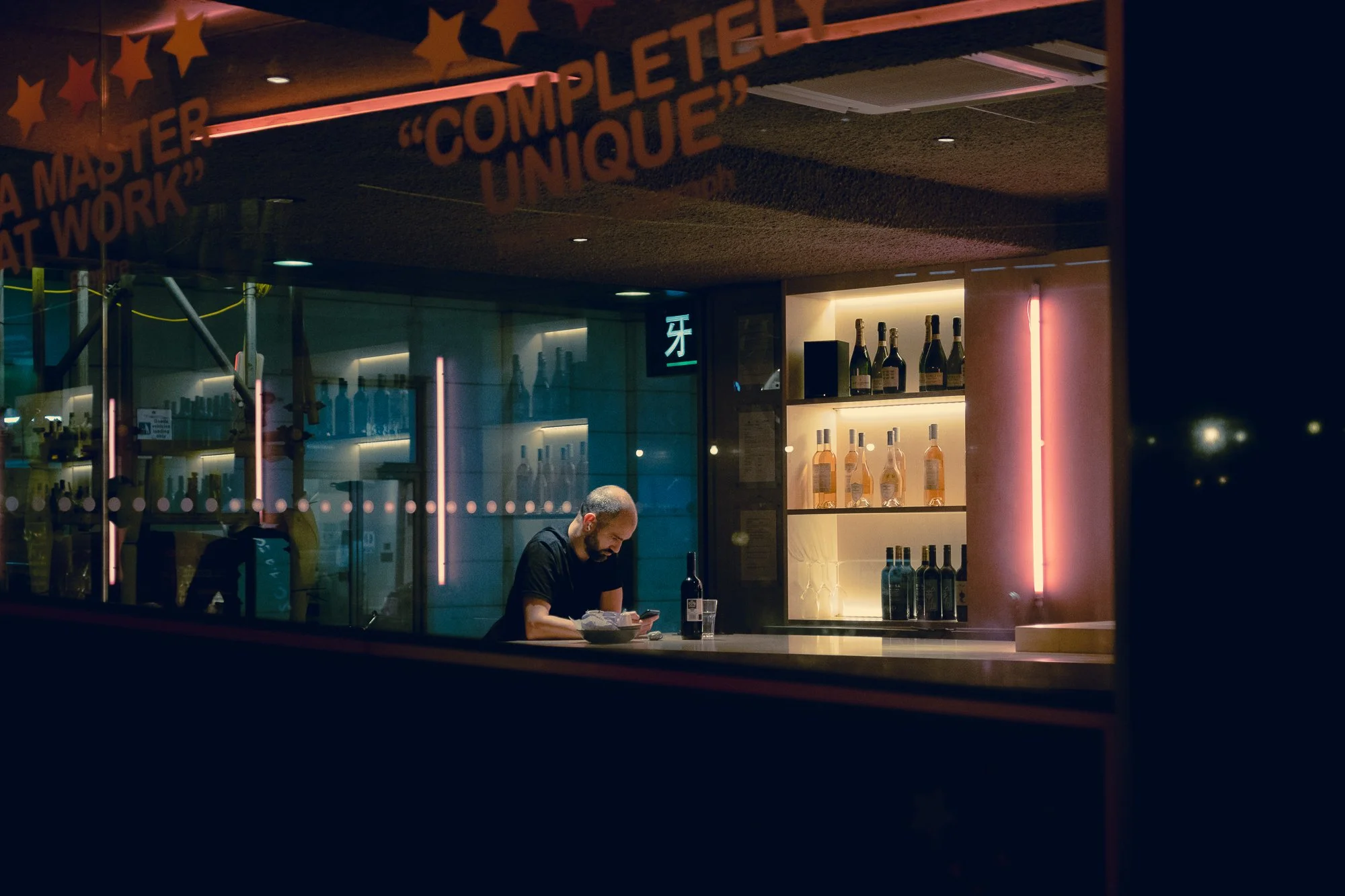
On The Dotted Line. London 2022.
What warmth there is, is behind glass, lining a familiar path as I retrace many prior journeys into the ever beating heart of Soho. Chinatown - it’s swinging lanterns, steaming fumes and breath-coated windows, lies to my left. The grid of small streets and smaller bars and cafes of Frith Street, Dean Street and old Compton Street buzz to my right. My plan is to dip my lens into all of them as the evening takes a meandering shape around the spine of Shaftesbury Avenue.
A fellow street photographer once explained to me why he never go back to somewhere he had visited before. He explained how he would work the scene, maximising everything he could from it and tick the box. Done. Never to return.
And here I find myself outside the Curzon. I knew I would. For me, this is a scene I do return to. And very, very often. Far from completing it, like some street photography “I spy “checklist, I have unfinished business. It is always changing. Not just the light at the different times of day, not just the people passing through, but the window display. The Curzon is both a bar and cinema - the window acting as a huge advertising hoarding for whatever is showing inside. As the films change, so does the window.
On a cold winters night, the window display frames whatever activity happens within. Had I been approaching from the opposite direction my eyes would have been inexorably drawn to the fuchsia-pink neon legend “Curzon - Soho” - so often the backdrop to my images, as I work the scene over a long time stretch, seeking that elusive one shot that sums up everything else I’ve tried to achieve here before.
On this occasion, the sign is out of shot and my eye is drawn to the lone figure, the single glass and the impatient bottle of red. Head down, our protagonist is alone; searching for clues on his phone. Alone, yet not alone.
To his right, are the beautifully lit bottles on the shelf. Plenty to drown even the biggest sorrows. The text imprinted on the glass above our solitary hero reads “Completely Unique” as if to emphasise his singularity. And, almost out of shot, “A master at work,” perhaps suggesting something deeper and intentional is it play here. The film advertised? “Licorice Pizza.”
It’s a scene that’s impossible to avoid connecting with Edward Hopper’s Nighthawks painting - painted as Japan bombed Pearl Harbor. How apparent this similarity was to me at the time, I cannot say. My image took a fraction of the time to create - 1/250 of a second. I am sure my visual dictionary and subconscious must have come in to play. Nighthawks is certainly a touchstone image for me and surely informed my composition.
I do know I’m a storyteller at heart and Hopper’s painting, with its different stories imagined for each person in the bar, is a great example of narrative in art.

Of course, my choices as a photographer enabled me to create the version of the story I wanted to tell. A glance at the other images on the contact sheet show he was not the only person in the bar. A few steps in one direction and I could remove them from the scene. As for his silent, anxious minutes with his phone…Maybe he was checking the football results while his friends popped to the loo. For me, the joy of images like this, is in the ambiguity. We can project our own imaginings onto the characters. This is the kind of street photography that excites me most. It speaks of the human condition and that is something we can all connect with.
Speaking of connections. It was a few days after this image was first shared on Instagram that I was contacted by the hero of the story. It seems some colleagues had recognised him and he decided to reach out. He was delighted and, in time, I was thrilled to be able to gift him a large print to adorn his new home. We have since exchanged a number of direct messages. I hope all is well my friend.

Finally, this image, titled On The Dotted Line, has been shortlisted for the British Photography Awards in the Street category. There are some amazing images alongside it - check them out here:
On The Dotted Line | Street 2019 Shortlist | British Photography Awards
There are plenty of photographers who use Soho as their happy shooting ground. Today, I’m going to recommend you check out the work of somebody who worked in Soho, projectionist in one of the many cinemas its narrow streets in the last 30 years. Bob Mazzer, took photographs on the underground – the tube – as he travelled to and from work. They are a great record of their time and of life on this narrow slice of London below the streets. You can check out an interview with Bob here: https://www.lensculture.com/articles/bob-mazzer-life-from-a-tube-the-london-underground

Bob Mazzer
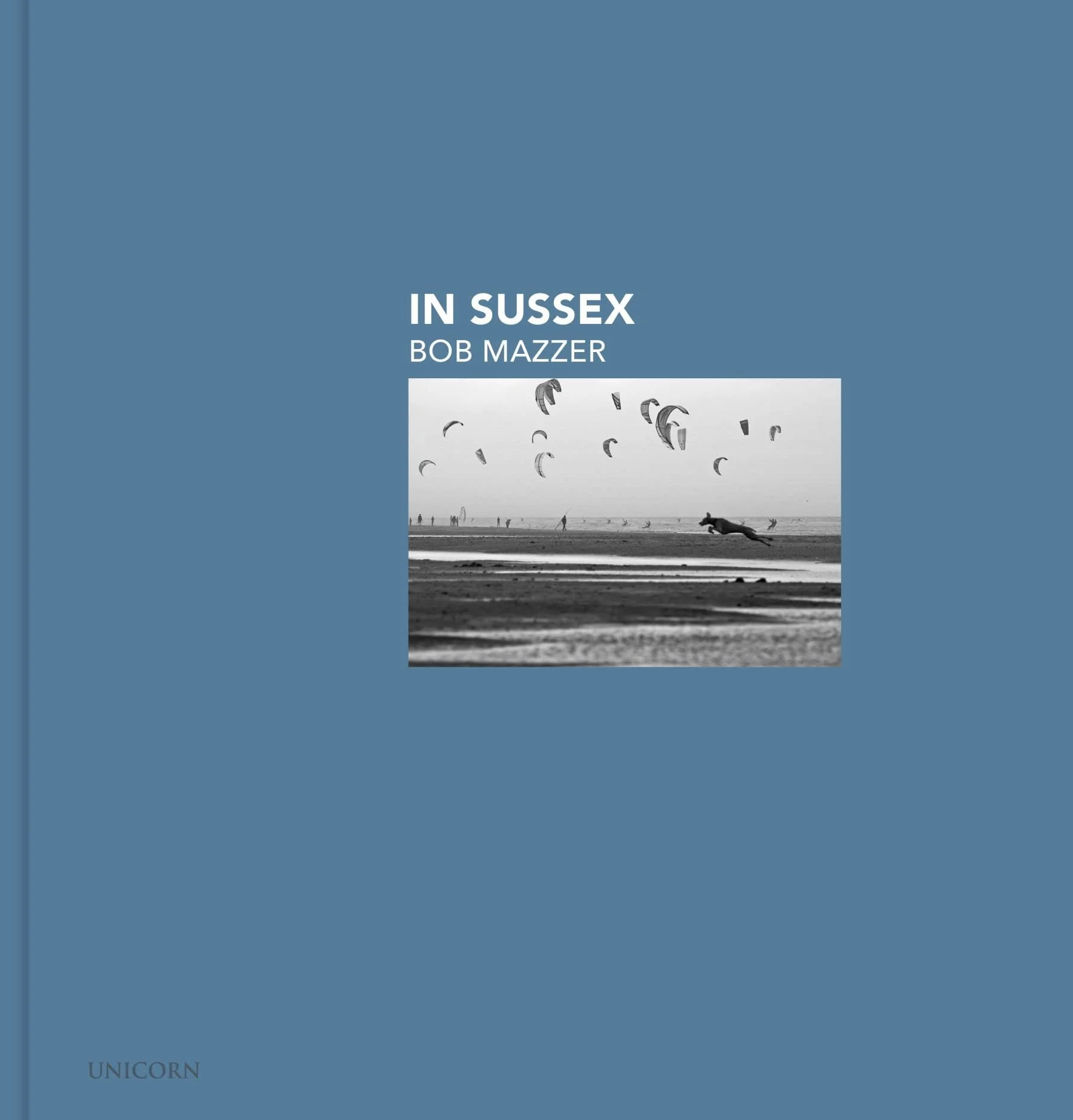
More recently, Bob has produced a book of photographs of life in the south east of England-Sussex.
Currently available are Bob Mazzer:

And In Sussex
As a musical accompaniment, it has to be A Rainy Night In Soho by The Pogues.
Thanks for taking the time to join me in my thoughts. If anything has resonated, or you’d just like to say hello, I’d love to hear from you in the comments below.
All the best,

Set: Southsea April 2021
Southsea on a grey Saturday in April. 2021.
As we emerged, blinking, from lockdown, the south coast was gearing up for something of a summer - even if it wasn’t clear yet what it would be.
As we emerged, blinking, from lockdown, the south coast was gearing up for something of a summer - even if it wasn’t clear yet what it would be.
Here are a few images from Southsea on a grey Saturday in April.


2020 - a baker's dozen
A look back on a year of images - one for each month and one for luck. Heck knows we deserve it.


I don’t ever recall meeting a baker who actually gave me thirteen when I wanted 12. Not loaves, rolls or cream horns. Not of anything. Mind you, I can’t imagine ordering twelve of anything anyway - certainly not cream horns. Nonetheless, as it’s the season of giving, I give to you my baker’s dozen of selected images from the year that we are about to gleefully kick in to touch. 2020.
These aren’t necessarily the most liked on social media - I didn’t check. They’re not necessarily technically the best. They’re not even the ones I think are definitively the best. They’re just the ones I like most at the moment of choosing. And the order is nothing significant either - it’s simply chronological; stretching back to a great afternoon in London walking miles with an old friend in the first days of January, through to images taken masked up and alone in December.
Cinema Three.
Soho, London. Jan 2020.
This was taken on a cold, dark winter evening in Soho, London. It’s an area I often visit, especially at night when the lights, and particularly the neon, are a huge attraction. I love shooting at night and using the artificial light that comes from shop windows, advertising hoardings, and signs. This cinema is a favourite haunt with its retro stylings and its red neon signage. There is often an image to be made here. The image was shot wide open because of the low light but that adds to the sense of depth. On this occasion, several things combined - as is so often the case when an image resonates with the photographer. Firstly, there were three people seated beneath the sign, perfectly placed with each framed in their own “box” of the window frame. The central figure was almost symmetrical with his shaved head which also reflected the red light of the sign. In fact, that unnatural red light permeates the frame.
Beyond, is the blurred figure on the stairs. Is this who they are waiting for? Do they know each other?
I was close to the subjects but, coming from behind, they were unaware. It would have felt quite different if they had turned to face me as I took the shot. Perhaps it’s also important that they are almost unidentifiable.

Reverse Portrait.
National Portrait Gallery, London. Jan 2020.
This image is all about colour and rhythm. It actually has a lot in common with the previous image - Cinema Three - not least that it was made on the same day, but compositionally. For some years now, I have made an annual pilgrimage to the Taylor-Wessing prize exhibition at the National Portrait Gallery, London, and always with my camera in hand. If you have never photographed people in a museum you really should.
Firstly, the rhythm of the four frames provides a great backdrop to the figure in front. Her placement, on the third, creates a good tension to the image. Her dyed blonde hair, roots showing, is echoed in the face covering of the left hand portrait; her roots echoed in its frame. Her blue coat is repeated in the face covering of the portrait on the right.
The take away from this image is to never pack your camera away, even when doing something which is not expected to yield any photographic result.

Gone Fishing.
Sweetwater, Witley, Surrey. June 2020.
Another image which is predominantly one colour - the lush verdant green that came as a result of the incredible spring and early summer that 2020 delivered. Some consolation for the pandemic - at least we could be outside.
Locked down and banished from the city streets, I took to training my lens on my local neighbourhood. This was particularly so on the early morning or evening dog walks. I don’t hold with the idea that street photography can only take place on the tarmac and concrete of an actual street. For me, it is about humanity - candid images of people or even just traces of humanity.
This image of a lone angler was shot on a much longer focal length than I would choose for the street. He was positioned across a private fishing lake and clearly noticed me lining up the image. In fact, I shot several. His expression is one of resignation - as if he’d been caught doing the one thing he loved and couldn’t even rouse himself from his seat to do anything about it.

The Only Living Boy In Soho.
Soho, London. July 2020.
Named after the Simon & Garfunkel song (or, truth be told, the Carter USM track which I knew first), this image was taken early on a Sunday morning and on my first time back in London after the first national lockdown.
London pubs had been reopened the evening before and, by all accounts, Soho was heaving with social distancing pretty much thrown to the wall. By the next morning there was hardly anyone to be seen. I like to think this chap had been part of the celebrations and just hadn’t made it home – his dark glasses a medical necessity.
Compositionally, he is framed on the third by the sides of Bridle Lane and, furthermore, by the double yellow lines. The twisted arrow is the final element and he has very conveniently chosen to sit right at its tip. And so he should.

Blue Ball.
Aberaeron, Wales. Aug 2020.
I have to confess to feeling a little uncomfortable in making this image. Running down the street in order to get parallel with two teenage girls is not a good look! However, I knew this street was lined by different coloured houses and it was really a question of reaching a specific point and from the other side of the road without them noticing me. Luckily, they were engrossed in their chat and concentrating on bouncing and catching their ball.
The blue van was just one of those great strokes of luck. On the other hand, the colour in the yellow short was obscured the ball carrying friend. Even better if the ball had been mid-air. You can’t have it all – not in candid street photography. Nonetheless, I was pleased with the final image because I had visualised it several hundred yards earlier and worked at it to get this final version.

Post.
Battersea, London. Aug 2020.
This image is the result of always having a camera with me – my everyday pocketable Fuji x-100f. images don’t take a break just because you’re not ready.
So this was taken looking down from the balcony of a fourth floor Battersea apartment. I was supposed to be moving boxes – not looking for shots.
The side of the balcony is very reflective and I was enjoying the potential symmetrical images that unfolded below. The street was quiet – Covid protocols – but the mail still has to be delivered. And here it comes all wrapped in red, pushing a cart.
Compositionally, the double yellows again form an integral part of the image – it’s important that they don’t go out of the right side of the hand frame.
Nothing clever, just spotted the potential.

Scoot.
London Waterloo. Aug 2020.
As much as I love to explore, I also like to make sure that I will definitely bag a few certainties when I’m on a photowalk. It’s never good to go home empty handed. I do need to go off the beaten track more in the year ahead.
Arriving in London, I’ve usually clicked off a few images on the train between Clapham Junction and Waterloo – just to warm up and get my eye in.
Just to mix things up (crazy eh?), on this occasion I left the station by a different exit to usual and was immediately faced by this fabulous wall of windows. Beyond, the sky was blue, trees green and the odd train heading out to Kent flashed yellow on to what resembled cathedral stained glass.
There was a slow but steady procession of passers-by but I had to get down to ground level for them to register against the coloured backdrop. This one was my favourite – a baseball capped scooter rider on his phone.

Three For The Festival.
South Bank, London. Aug 2020.
Excuse the slightly obscure title. It references a Roland Kirk track from one of my favourite albums (We Free Kings) and came to mind as I shot this against the chalky white walls of the Royal Festival hall.
It was actually taken shortly after Scoot, the previous image; a very hot late Summer holiday when London was busying up but definitely not back to pre-pandemic levels of anything.
Harsh afternoon sun scorched the stone wall and, by metering for this, the carnival of pedestrians was thrown into harsh silhouette. Composition became a question of finding the right rhythm in the walkers and waiting for some clear separation. This image had a satisfying stepped progression in heights and a great clarity around the facial features. Notice, also, the important part played by the railings which are black in silhouette apart from where the sun catches them and shows them bright white.

Corona Trim.
London. Aug 2020.
Another from August in London – a period which now looks like a precious time between Covid waves and varying degrees of lockdown. The virus was comparatively quiet down south and barbers were able to open and their clippers could run amok.
The classic red and white poles in a new-fangled configuration draw the eye in and dwarf the two characters. I wonder if the longest lasting images contain features which fix them at a specific time. The full PPE face visor does just that here.
I have no idea what the customer looked like before he took his place in the chair to be held down by the weight of the barber’s white towel. However, he does not look like the kind of chap who has much need for a barbershop. This only adds to the quirkiness of the narrative.

Red Alert.
Soho, London. Sept 2020.
Another shaved head. In times to come, I suspect this image will be one more that is very much of its time – twixt lockdowns. The disposable mask made in surgical colours indicates that the situation was still not permanent enough to require investment in a three-layered fabric version. The mobile phone in its wallet casing. The wired headphones. Move on twenty years and this will really speak of 2020.
As a novice photographer, it took me a long time to appreciate colour. Here the blue of the mask resonates with the walls of the bus and the darker blue of the seats, complemented by the swatches of yellow. The red of the traffic lights, picked up in the two windows and edged in the closest window frame, speaks of danger – an emergency. It’s even reflected on his head – thoughts of his own peril. Maybe.
It was taken on Shaftesbury avenue in London’s Soho, while the bus was stopped, waiting to enter a quieter than usual Piccadilly Circus.

High Tea At The Edge Of The World.
Whitstable, England. Oct 2020.
One thing lockdown did allow, at various times, was meeting up with people from other households outside. Of course, here, being English, tea was an essential part of this.
This was taken during a weekend stay in Whitstable, Kent in October – not the warmest time of year for a picnic by the sea; hence the mountain strength fleece jackets. This is no causal meet up. Brightly coloured chairs, a camping stove and kettle (also nice and bright) have all been factored into the planning.
The position, way up high, above the rows of beach huts, affords views to the wind farm on the horizon (and even the rusting old hulks of the defences for London against German invasion threats). The clouds threatened but nothing was going to detract them from their tea.

Red Flag.
West Wittering, England. Oct 2020.
Another shot of red – another warning. I suppose that must be something of a theme for 2020.
Unable to walk the city streets, I took this at West Wittering, Sussex. It was a dull October morning with grey skies, greyer seas and reflective grey beaches. The only real colour came from the “Don’t Swim” flag billowing in the wind that made white horses of the incoming tide.
I’m really drawn to the textures of the stones in the foreground and of the waves frozen in a fraction of time. The soft, dark grey clouds counterbalance the solid shapes of the groynes, and the flagpole provides balance to the other markers nearer the water’s edge. The tonal range is much greater than might be expected with tiny dark figures silhouetted against the bright reflected light of the beach. The tiny stick-like figures remind me of a Lowry painting.

Night Grind.
Soho, London. Dec 2020.
In many ways, this image brings us full circle back to the kind of images that I might have expected to have been making all year. However, this picture gives a misleading impression.
This was taken during, what we now know was, a brief interlude between two national lockdowns. London did not feel 100% safe but it was quiet despite being what should have been full-on Christmas shopping and office party season. It wasn’t difficult to walk the streets and avoid contact.
So, this is Soho again. And it’s a much visited street photography site – not without good reason. The neon signs are such a draw. The writing on the wall in the café harks back to the area’s more seedy times and says “French lessons given downstairs” – gotta love a euphemism. These provide the backdrop on to which characters come and go. Here, it’s that beautiful collection of curves that is a London taxi, stacked up in the slow moving jam, pulling into Regent Street; and being overtaken by the blonde pedestrian heading home from the office.
No doubt 2020 will go down in infamy. It has impacted upon so many people in many tragic ways through the loss of loved ones and friends – myself included.
It seems trite, or worse, to speak of the impact of Covid 19 on my photography. I only do so to highlight the fact that street photographs speak of the times in which they are made. Most of the images here have been impacted upon by the virus. Sometimes this is down to the subject matter – mask wearers, deserted streets or outdoor tea parties – or because of an enforced change of location – a British holiday or a walk on a beach instead of a city street.
Perhaps what has surprised me most is that the images chosen are all colour. There’s no doubt I have increased in colour confidence – confidence in myself not to completely over-process an image, I mean. I’ve always had greater “belief” in my black and white work. This year there were black and white images that I was pleased with but they seemed out of place or tokenistic in this colour-field.
Maybe we all just need a bit more colour in our lives right now.
Stay safe people.

2020 Vision - how I saw the year.
2020 has been a challenging year for just about everyone. Street photographers are no exception. For me, the important thing was to keep going.

Red Alert.
Soho, London. Sept 2020.
Not that anyone should be able to predict the contents of their Christmas stocking, but when this year began I would never have foreseen that Santa would be leaving, not one but, two face masks. Just one marker of what a strange year this has been.
And, of course, it is all reflected in the images I have taken too; the number of images, the location and the style and the genres captured. Or, perhaps to put it more accurately, in the images I haven’t taken.
January saw several photo walks, both solo and accompanied around favourite London haunts – the world was seemingly unfolding as it should. Soho, the West End, the South Bank, the City and Columbia Road flower market were all exhibiting the old normal; while rumours of the far away virus caused few visible ripples. Things are never as bad as they seem.
The end of February saw me shooting in London with trepidation nibbling away at me but not enough to stop me. As I returned home I did wonder how long it would be before I returned.

One Last Time.
Paternoster Square, London. Feb 2020.
Lockdown, when it came at the end of March, seemed late. Other countries were ahead and we didn’t seem to be reading the signs – football and race meetings carrying on defiantly in a weird echo of the Blitz spirit but against an invisible enemy that wanted us to do just that. I had no idea when I would be able to reclaim my London streets from this undetectable foe.
Only essential travel was permitted. Not being a “real” photographer – someone who could make a living from photography- I could hardly claim it was essential for me to be out and about in the capital. Yet I felt that history was being made on those empty streets and that it was running away from me.
I also needed to shoot. It’s what I do. It completes me. Balances everything else. Gives me an escape. Perhaps I am an escape artist.
I also knew enough to know I didn’t (and don’t) want this virus; thank you.
So, as we got used to the new normal, social distancing and a distinct lack of toilet paper, so the number of photos taken dropped off sharply. Street photography where I live is a real challenge for me, as I have described in other blogs. Too many people know me. And it’s very hard to see home streets objectively. When I did go out, my camera still came with me but it was just in case”, rather than with any real sense of intent or expectation.
Increasingly, I found I was taking photos on my early morning or evening dog walks. I began keeping the camera in my hand instead of in a bag – ready. I started enjoying the walks more. I slowed down., looked around, noticing the subtle changes as spring bloomed around me and melted into a hot summer. Miraculously, lockdown weather was incredible and everyone took themselves outside to live their lives. It was as if nature was compensating.

Sweetwater, Witley, Surrey.
June 2020.
As we got used to the “new normal” and the world realised that life would have to continue to enable market forces to regain the upper hand, it began to feel safer to emerge from this bizarre hibernation. After one tentative afternoon scoping the outlying Battersea and Chelsea on foot, I finally made it back into the heart of the city at the beginning of July.
London was finally allowed to reopen its pubs, which it did in a characteristically crazed Saturday night – all or nothing, seemingly – on the 4th of July. The Independence Day coincidence was not lost. The next morning, a beautiful summer Sunday, I returned for the first time in over four months. It was incredibly quiet (see Post-Lockdown London). Sure enough, it delivered the empty streets and squares that I’d been so keen to document and was worried I’d missed. It also displayed all the paraphernalia of Covid Life – hand sanitisers on street corners and in station concourses, painted footprints strategically distanced; Thank You NHS signs and graffiti. I sat in my first café for months; all alone with a double espresso and an anxious frown on some side street in Soho. But at least I was back.

The Only Living Boy In Soho.
Soho, London. July 2020.
What turned out to be a long hot summer didn’t pass me by but afforded me a few days walking and shooting shadows along the South Bank and up into the City. It felt good to be keeping my hand in and to feel that I wasn’t losing my mojo.
A week’s holiday in Wales kept my camera firmly in reach for some coastal images – both candid, public shots and stormy sky-ed landscapes. It even had me thinking about tripods and filters - briefly.

Aberarth, Wales.
August 2020.
The autumn term (I’m a Headteacher when I’m not doing the street photographer impersonation) usually sees me taking in a few London evenings and weekends. However, as we neared what became Lockdown II in November and, then the introduction of Tiers in December and even tighter restrictions again over Christmas, I have almost entirely stayed away.
In the UK, the vaccine has started to roll out. Over 500 000 of the eldest vaccinated so far. It’s going to take a while to have an impact. And, in the meantime, new more virulent strains of the virus are making their presence felt. But 2021 does hold hope, certainly in the longer term. For now, I guess I’ll be reaching for that wide angle lens, walking boots and maybe even a tripod and a filter or two.

Night Grind.
Soho, London. Dec 2020.

Post Lockdown London - The New Normal
As London began to reopen in early July, I photographed the deserted streets.

I always remember seeing photographs from the Second World War showing streets with people rushing to sand bagged air raid shelters, or newspaper boys with hoardings proclaiming the outbreak of war, or crowds dancing jubilant in Trafalgar Square on VE Day. There was something mesmeric, possibly haunting, abut the familiarity but strangeness of these images. Here were places I knew, and scenes that were familiar, but distorted by the events that had transformed them at that point in time.
History has always fascinated me and part of it has been a desire to be able to go back and witness momentous events but to be able to do it safely. I think that would be my superpower, if I could choose one. And of course, I’d have a camera in hand.

I have always counted myself lucky that I grew up in a generation that never experienced the world wide conflicts that took place in the first half of the last century. These were events which in many ways defined the age and the generations that lived through them. Now, this global Corona Virus pandemic has provided our defining worldwide event.
The invention of the camera, less than two hundred years ago, gave to history the means to record more objectively and instantly than ever before. As street photographers, I truly believe that it is our responsibility to record our current times for those still to come, just as Bert Hardy, Bill Brandt and Alfred Eisenstaedt did for World War Two with their images of GIs, tube sheltering Blitzed Londoners or sandbagged Whitehall. I have always felt that the ubiquitous appearance of mobile phones, ear pods and vapes would be the accoutrements that would characterise our times when people looked back.
Then along came Covid-19.
Who could have predicted that summer 2020 would be defined by empty streets, face masks and huge government publicity campaigns? In actual fact, very much like World War Two.
So, I was keen to capture these street scenes. But not keen, also.

I wouldn’t be walking the streets of London with one eye skyward for a doodle bug, Stuka or V2 rocket. I wouldn’t get a siren warning of impending danger. My enemy was the Covid-19 virus - invisible, undetectable and potentially anywhere. After months of taking great care and working from home whenever possible, as the government advised, travelling on public transport and being out and about in London felt like a risk I possibly shouldn’t be taking. After all, I was only going to take photos. Who did I think I was? David Bailey?
But there was also a longing to return to normality and a desire to experience the creative process of making a photograph: that moment when everything else ceases to exist or, at least, to matter. Let’s face it. I needed to get back to street photography to recapture a sense of self, of what makes me me; if nothing else.
Two good reasons then - a responsibility to posterity and my own mental well being!

And so it was I found myself exiting an almost deserted Sunday morning train at London Waterloo, glasses steamed up from the mask that I was not yet used to wearing, camera clutched in my sweating right hand, phone gripped with my online ticket ready to scan at the gates.
Waterloo itself was immediately different with just a small number of people on the concourse. I wanted to capture the gates with all of the 2m distancing signage and encouragement to wash hands but was immediately pounced upon by three transport officials who wanted to know what I was doing. I suppose it’s not technically a public space so they were presumably within their rights to challenge me. I explained that I was a street photographer and they looked at each other and shrugged - seemingly proof enough of my credentials. I wasn’t quite so lucky a few moments later when another officious, uniformed woman told me I would need a permit to take photographs at Waterloo. Having shot there unchallenged many times, it did feel like a wartime restriction.

Moved along, the streets were deserted. I know it was a Sunday but it was a shock to see the streets around the station with no one on them. I crossed over Hungerford Bridge to Charing Cross. There seemed to be the lowest tide I had ever witnessed on the Thames (Sunday 5th July) which only served to make what should have been a glorious summer Sunday seem even more surreal. It was as if the people and old Father Thames were deserting the city.

In Trafalgar Square, Nelson gazed down on acres of stone, concrete and pigeons. There were the classic London red buses, making their rounds almost empty, but not a soul in the square.

The same was true of Piccadilly Circus - just a solitary figure at a hand sanitising kiosk, offering a squirt to anyone who happened to walk by. Hardly anyone did.
Regent Street was pretty much the same. Oxford Street only slightly busier, a handful of curious wanderers, but nothing like the usual melee of tourists, office workers and rough sleepers.
This was the day after the Boris Johnson’s government had allowed the pubs, bars and restaurants to reopen after weeks of lockdown. Soho had apparently been heaving with little acknowledgement of social distancing, as revellers enjoyed the cork fizzing out of the bottle of pent up frustrations. The following morning was quiet. Perhaps a hangover. But there was almost no one in good old London town.

Masks, NHS rainbows and thank yous, hand sanitising stations, closed signs on restaurants, familiar buses but fewer and empty, tube exits closed, pedestrians redirected... the first signs of normality.

Arriving home, I shared my images with intrigued friends and families, eager to see what had become of the capital city, just not quite ready to visit it themselves. And the the doubts crept in. Should I have gone? Had I caught anything? Would I be infecting anyone?
And the wait to know I was fine began.
Last Time Out.

Waterloo, London. Feb 2020.
Fuji X-T3 25mm f2.8 1/500 sec
Whilst it also removes many freedoms, life in lockdown gives us plenty of opportunities. When have we ever had the luxury of Time that Covid19 has afforded us? Time to consider things in a far less hurried way.
“...every image seems to have become tainted by the virus...”
Without new photos to edit, many street photographers have gone back through their older images to find that precious nugget that was possibly missed last time round. Or the B List photos that never quite saw the light of the Instagram day. I haven’t quite reached there yet – but it’s on the horizon.
I postponed looking at the images from my last street photography walk for longer than usual because I knew that once I did, then that was it. No new street photos to edit for the foreseeable future.

Ride Or Stride. City of London. Feb 2020.
Fuji X-T3 26mm f2.8 1/500 sec
Week 3 of lockdown saw me take the plunge. I usually wait a week or longer if I can before editing anyway. It’s good practise, enabling me to see the images as they really are. Not subjectively.
Images that I work hard to take become invested in so much unnecessary weight because of the time spent trying to make them work or just to catch them in the first place. A week or two usually alleviates this nagging tug and I can look at them with less emotional attachment. This was now six weeks later, nearly seven. I’d done well.
“Times have changed and photos taken less than fifty days ago have already become historic images.”
What has happened this time is that every image seems to have become tainted by the virus, or at least by the lockdown situation. It’s hard to view a crowded street in the same way as it was when it was shot; or a tube train, crammed like sardines, without an element of judgement; or even a lone figure, without assuming they’re part of the isolation scenario, when actually it was just a quiet underpass.
Of course we read too much into those images with the short sighted lens of history which we are already wearing. Times have changed and photos taken less than fifty days ago have already become historic images. They speak of the past. It’s not a distant past and hopefully we will return to many of those freedoms that we took for granted sooner rather then later. But what will have changed?

One Last Time. Paternoster Square, London. Feb 2020.
Fuji X-T3 55mm f2.8 1/500 sec
For those of you who are interested in kit, gear and where and when, these images were all shot on the Fuji X-T3 with the red badged 16-55mm lens. This is not my usual lens choice. My “go to” lens is the 23mm f1.4 which I love for its clarity and the focal length (equivalent to 35mm full frame) seems to fit about the right amount of street into the image. It allows me to get close and it forces me to get close, if that’s not a contradiction. This time, however, I chose the 16-55mm zoom.
“It’s always good to mix things up.”
One reason for this choice was that I had wanted to try some images in the city where I could experiment with contracting the scene which I knew the longer focal length would allow. Secondly, I was not specifically on a photowalk. I wasn’t out for the whole day but was going to meet up with some other photographers and see the exhibition My London hosted by 3 Street Gallery featuring the work of Brandon Wong, Craig Whitehead, Joshua K Jackson, Josh Edgoose, Mavis CW, Mark Fearnley, Mo Barzegar, Sean Tucker and Shane Taylor. The longer lens, if it proved too heavy or somehow inappropriate, would be only for a relatively short time on my walk to and from the exhibition. It’s always good to mix things up.

The Last Coffee. City of London. Feb 2020
Fuji X-T3 55mm f7 1/500 sec
For those of you who know these streets, my route took me from Waterloo along the Southbank to the National Theatre and over Blackfriars Bridge, up to St Pauls and Paternoster Square, then up through the backsides of The City to Broadgate, and back to Waterloo via Bank.

Orange. The South Bank, London. Feb 2020.
Fuji X-T3 55mm f7 1/500 sec
Photobooks - what you told me....2019
The end of another year is always a good time to reflect. Amidst all the pre-Christmas talk of gear and new products, I would always put in a big shout for the importance of photobooks. Anytime is always a good time to stop and pick up a photobook. Other people’s images feed us. They will probably improve our photography far more than new equipment – they’ll certainly give you more bang for your buck. If you think about it, every time we click that shutter, we are bringing to bear the total of our experience and learning up to that point. Everything that has gone before helps us frame that image so if we can educate our eyes with the best quality images then we are in a better position to take that amazing shot.

Some of your recommendations
I am always on the lookout for new photobook suggestions so I turned to social media (Instagram and Twitter) to find out what my followers have been enjoying this year. Importantly, I did not specify that the book needed to have been released in 2019, or even that it had to be available (sadly some of them are hard to find) – just a book that had been enjoyed this year. Consequently, most books are of some age and reputation; after all, we have a photographic history stretching back over 150 years. What has gone before carries significant weight, whereas the shock of the new takes time to kick in, for the word to spread and for true worth to be recognised. Finally, on the suggestions, although my following is mainly street photographers, I did not specify any particular genre of photography. We should have open minds and learn from every genre, recognising quality when we see it.
Some photobooks are very difficult to track down. Long sought after books by Fan Ho, W.Eugene Smith, and Tony Ray-Jones, to mention a few, are still very much on my “hope to find” list. I know from bitter experience that photobooks are usually on a limited print run and if you aren’t quick with your shopping basket they will disappear forever – or at least move to the super-expensive used books pile. I can only comment on books I have physically had contact with.
If I had to choose one book that stands out for me this year, I’d pick two! Firstly, The Street Philosophy of Garry Winogrand by Geoff Dyer – I’ve long admired Winogrand’s work and this is a sumptuous, large (heavyweight) retrospective. Coupled with Geoff Dyer’s always insightful words (if you haven’t come across him try The Ongoing Moment about photography or But Beautiful about jazz) it’s a magnificent book.
My second choice is a compilation album – the ideal quick pick up by the bedside, bath or loo! David Gibson’s Street Photography: A History in 100 Iconic Images. As you would imagine, it takes 100 images by 100 different photographers, in chronological order from 1904 (Edward Steichen’s remarkable image of The Flatiron – complete with evening lights and top-hatted carriage drivers) to 2017 (Alessandra Sanguinetti’s image of five girls taking a group selfie). Each image is accompanied by a page of David’s excellent analysis and background to each image.
The list that follows contains the recommendations I received. It’s a great list; many I know, many I will hopefully get to know – and some I can only hope to get my grubby hands on.
There is no logic to the order in which they are listed; it is simply the order in which I received them, over two days on Instagram and Twitter. A huge thank you to everyone that made a recommendation or two; you are credited at the bottom of the page. Please do check out their online galleries as well as the books listed.
All of the books that I could find available on Amazon are listed here on "Books You Recommended" on my Amazon street photography page.
The list:
Alex Webb - Brooklyn
London Underground 1970 -1980
Humans of New York - Brandon Stanton
Gregory Heisler - 50 Portraits
Masahisa Fukase - Ravens
David Lurie - Images of Table Mountain
Stephen Leslie - Sparks
Tom Wood - Bus Odyssey
Siegfried Hansen - Hold the Line
Jeff Mermelstein - Sidewalk
Gus Powell - Company of Strangers
Fred Herzog - Modern Colour
Jonathan Higbee - Coincidences
Bruce Davidson - Subway
Raymond Depardon - Glasgow
Dawoud Bey on Photographing People and Communities: The Photography Workshop Series
Jane Bown - A Lifetime of Looking
Vivian Maier - Street Photographer
Peter Lavery - Circus Work
Shomei Tomatsu - Chewing Gum and Chocolate
Saul Leiter - Early Colour
Saul Leiter - Early Black and White
Richard Sandler - The Eyes of The City
Don McCullin - Tate retrospective
Sebastião Salgado - Genesis
David Solomons - Up West
Nan Goldin - The Ballad of Sexual Dependency
Jill Freedman - Jill’s Dogs
August Sander - People of the 20th Century
Anton Corbijn - The Living and the Dead
Friedlander by Peter Galassi
Robert Frank - The Americans
Stanley Kubrick Through a Different Lens
Susan Sontag - On Photography
Trent Parke - Minutes to Midnight
Anders Petersen - Soho
Jim Mortram - Small Town Inertia
Sohrab Hura - The Coast
Erwin Olaf - I am
Todd Hido - Intimate Distance
As always, I’d love to know what you think and if you have any suggestions of your own please just add them in the comments below.
Thanks all.
Credits:
Thank you to the following on Instagram:
@kyun.pic
@jenslookingglass
@fabiennehanotaux
@nicofroe
@alwayschasingdaylight
@neilwaybright
@laserkola
@mark_lev_photo
@chris_eley
@abitpedestrian
@stevereevesdirector
@huwjohn_uk
@zenostr33t
@streetlyspeaking
@williamhpearce
@ashsmithone
@venus_lumieux
@tripsonstreet
@bastianromanpeter
@samantha_french_
@streets.and.stories
@j2.bee
@timwadham
@simonking_v
And on Twitter:
Kim Aldis @ThatPhotoBloke
Dave Webb @PhotoWebb
Sarah Marston @Sarah13Marston
Ed Robertson @eddrobertson
Instagram: Doing it for the love - not for the likes

Doing it for the love - not for the likes
In my last post I wrote about Instagram being a huge social melting pot with representatives of just about every person you could possibly imagine - the best bar in the world.
I want to you to grab a pint in that bar now and settle back while I talk about my views on what makes it work for me. This is purely personal so please take it with a pinch of salt (and vinegar crisps) but bear in mind that my thoughts and experiences are likely to be similar and even familiar to you.
As I mentioned before “for photo sharing, it’s the best place we have to display our media to a wide audience.” Okay so the image is going to be relatively tiny but think of the coverage compared to what you may have had EVER before. Use that small phone sized image as a taster for your website – an aperitif, if you will – for those higher resolution images if you want.
Of course, if you can show your images then so can anyone. Hence the vast amount of traffic all day every day. Because of the two-way nature of Instagram I am going to write about what I think should be posted in a photographer’s feed – which images to post, which to leave out and how to manage it. Then I will write about what I want to see from others when I open Instagram each time.

A Photographer’s Feed:
Shoot for yourself - firstly, post the pictures that you would want to see. One of the reasons I wanted to take photos was that no one was quite expressing what I wanted to see in a photograph. If you are shooting the images you want to see then you should be posting them too.
That’s much easier said than done; especially when likes and followers begin to be taken into account. It’s very easy to get drawn into posting images that you think will garner most likes and new followers. You should resist this as much as possible. Shoot and post for you – there are enough people out there who over time will find and appreciate what you are doing if it is of quality. That way you post images you believe in and, most importantly, you develop your own distinctive style. I love reflections, night scenes, harsh light, umbrellas, shadows, silhouettes, smokers, hats, close ups and details, wide scenes, layers, reds, blues, high contrast black and whites, juxtapositions - and that means I shoot all of those. Not just hats; or silhouettes; or steamy Soho night scenes… as much as I love them, or whatever else is currently getting the love.
Feedback – better to give and receive
I relish meaningful feedback - especially when it comes from other photographers who I admire and respect. Criticism is so important if we are to grow and develop our craft. We all know how an image that we have spent ages framing up, processing and posting can easily just be seen through our own optimistic glasses. We wonder why others can’t see the amazing image that we waited for hours in the rain to catch. But the viewpoint of others means so much if we are to progress. Instagram gives us a ready-made audience for our work; ready made to offer tips, advice and, if you’re lucky, plaudits, for what we post.
The downside, and the one danger of Instagram, is that it can massage your ego rather than keeping it in check. Like for a like does not necessarily engender criticism. However, if someone gives up their time to comment on something I have posted then that should not be discounted. It’s a big deal. And I will try to repay that with a comment in return. As I said in my previous post, this is the social part of Instagram. It’s where relationships are forged. So, welcome comments – and be positive in return. Be nice – “if you can’t say something nice then say nothing at all” is a good maxim. Criticism helps us grow but nurturing feeds us.
Networking – we are social animals, even if it doesn’t always seem like it. And if you have signed up for an Instagram account then you can bet you are among the more sociable of those social animals. Feedback in both directions creates relationships - you’ll be surprised how well you get to know other photographers. The next step is often for some of these online relationships to become “meet-ups” and photowalks where you can share and explore great places to shoot, gear ideas and thoughts, and inspire one another. There is nothing like shooting in an area with other creative photographers to raise your game. But even without a physical meet-up, the benefit of interacting online can be much like the benefits of a shared photowalk.
Hashtags – something of a dirty word, or at least fraught with opinion and division. Basically, if you don’t use hashtags you may as well pop a photo in a glass bottle and fling it in the North Sea. The chances of anyone finding your work will be remote. A few (up to 30) well-chosen hashtags relevant to your image (don’t use #blackandwhite if the image is colour) will ensure that it gets noticed. I’m no expert but it seems like a Goldilocks problem – the popular hashtags are so huge that your work won’t appear for long enough to be seen, whereas the tiny hashtags will have little reach. They need to be just right to get picked up. Oh, and they change over time. And don’t start me on the algorithm. I’m not wasting time trying to guess what it’s doing or how it works.
And finally, on your own feed, don’t worry about the number of likes - hard to do and I wish I could say I didn’t always, but I am getting better and, yes, it is very liberating. I honestly feel that if I post what I want to see then I will find people who follow me because they see the world in the same way or are interested in how I see the world.
In short, post for you - and be nice.

What I see:
I want to be inspired. I want you to post images that stop me and make me think.
Surprise me - develop your own style but I don't simply post variations of the same thing all the time.
Keep your feed clean – by that I mean stick to one genre (for want of a better word). I don’t want photos of meals, mountains, mates… I am a street photographer and you can tell this by looking at my feed. The feeds I want to follow are street photography feeds too. If you want to photograph your kids, pets, holidays that’s great, but have a feed for them. You can have as many feeds as you can manage. However, if you want me to follow your street work then that will be all I want to see.
And curate your feed - don’t follow a travel photographer unless you want shots of pyramids and elephants in your feed. Follow for a follow soon clutters up your feed with people who are not genuinely interested in you or what you are posting – but are genuinely interested in having you on their follower list. If I don’t follow you, it’s not personal. I’ve found some amazing images on Instagram but if they aren’t street photography I won’t follow them on my street feed.
Hashtags – the double-click on an image is a really great way of liking a picture – far simpler than navigating to the heart to click. However, there’s nothing more irritating to me to find the image is filled with hashtags. Use hashtags in the caption or the comments - not on the image; no one wants to suddenly find they’re whisked away to somewhere else just because they tried to like your image.
Don’t tag me in an image just to get me to look at it. If I’m in it, or if it’s truly relevant then fine. But if you just want me to see you then it’s just noise and its irritating. It’s like knocking on my door and legging it.
So…
Accept it for what it is – probably the best image sharing tool we currently have it. Enjoy it. Do it for the love – not for the likes.
This was going to be a few thoughts – I hope it’s not too much of a rant (oh dear) – most of all I hope you find it useful. Let me know in the comments below.
Have a good one.
Art On A Postcard
I am hugely honoured to behave been invited to contribute three photographs to the latest art On A Postcard exhibition which is showing upstairs in Old Spitalfields Market in London this week.
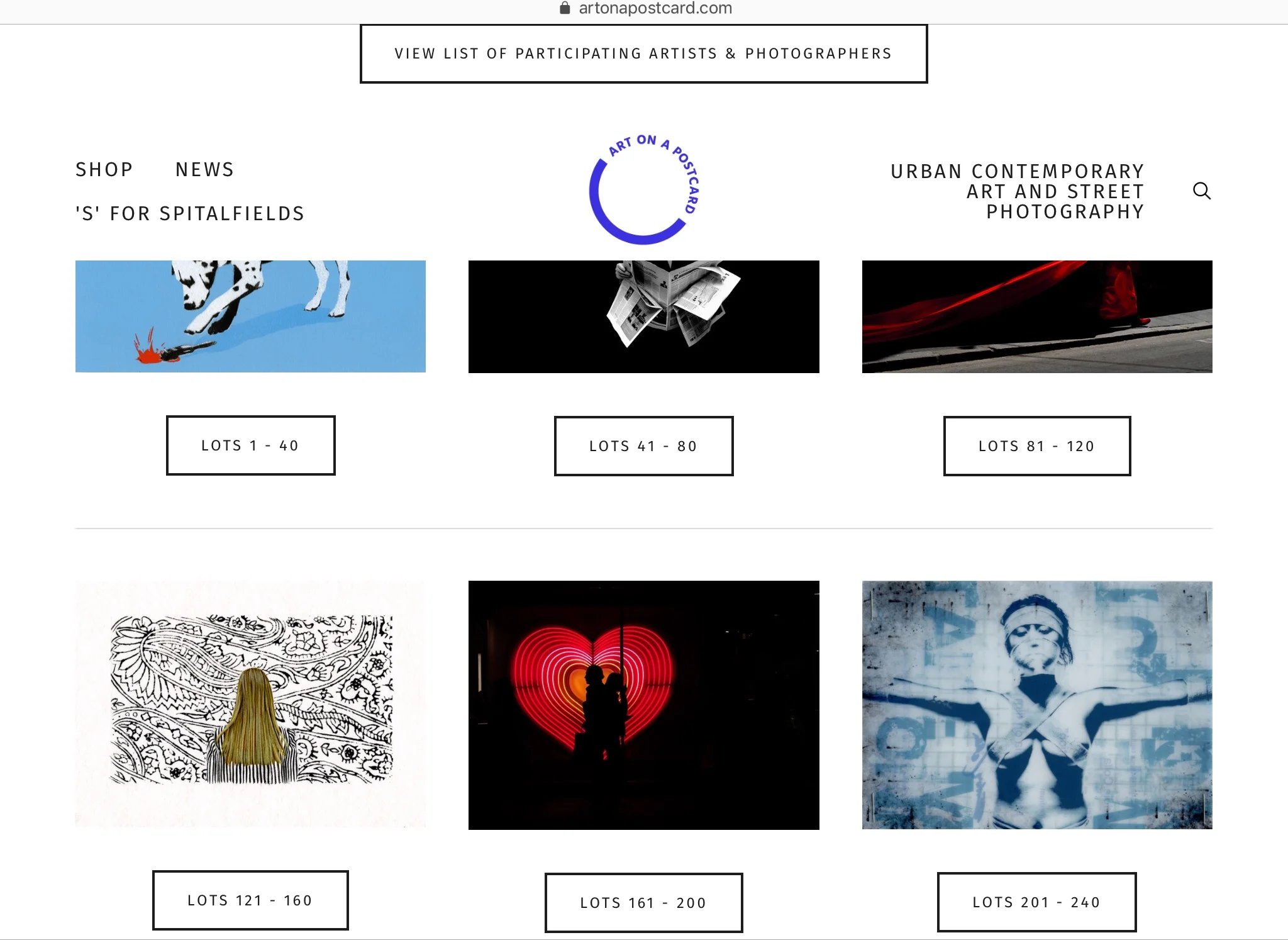
Art on a Postcard raises money for The Hepatitis C Trust as it aims to eliminate hepatitis C by 2025. Urban artist Ben Eine and street photographer Dougie Wallace have curated this latest exhibition. Every one of the urban artists and street photographers has donated their work for free.
Each image is made into a postcard which is then auctioned via the website. Bids start at £50. Each artist remains anonymous until the auction closes on 12th July. If you know an artist and their work you will probably be able to identify their images within the selection of postcards. Or you may get a nice surprise. I like the idea that you bid for an image you like - not just for the artist you perhaps follow on social media.
It’s featured on London Live :
<iframe width="620" height="348" src="http://www.londonlive.co.uk/embed/news/2019-07-03/old-spitalfields-market-showcases-worlds-best-artists-work-on-postcards" frameborder="0" allowfullscreen></iframe>
The exhibition closes on 7th July but the auction continues until 12th July and is online at https://www.artonapostcard.com/spitalfields-2019
Why do you take photographs?

I know what you’re up to…
In a recent post (What are you trying to achieve?), I wrote about some of the reasons I take photographs. In my Instagram (@hueyraw) stories I had also asked why you take photographs and this post captures your responses and builds on my thoughts.
As I expected, the therapeutic nature of taking photographs for pleasure registered highly. For most people, in this age of photographic democratisation, with almost everyone having a camera via their phone, photography is not a means of making money and is secondary to the day job. Many of you, like @sleepingastronaut, see it as away to relax; something that takes your mind off work (@mybeardandmypenguin, @chris_silk_street). It’s an escape – something which should not be underestimated in this busy world. As @zenostr33t, puts it “…ultimately it comes down to escaping work day pace.”
““It’s therapy for me; when I go out to take photos all of the other things in my life vanish for a short time.” ”
That therapeutic effect is reason enough to get out and make photos. For some of you, it is clearly more than that. Fabienne (@fabiennehanotaux) recognised “…a deep need to create, to express myself, to escape.”
I think this need to create is deeply human. Furthermore, the artistic element of creation which enables us to express ourselves, our emotions and our feelings in response to the world around us, is enjoyable, communicative and, therefore, sociable. This is underlined by the huge success of social media, such as Instagram, where photographers can now share their work, and enjoy the work of others instantly, and like never before.
This creative process changes us. I know that since I have been taking photos I have become far more alert to my surroundings, spotting things I would never have noticed previously. This is enriching. As @atelier_dope puts it, the “… process of creation is enjoyable and every now and then I’m rewarded with an image I enjoy.”
Many of you commented on how this enables you to see things in a new way and to seek to make the mundane beautiful (@sixframestreet; @piyush_mishtra_18; @theweijian). That is certainly at the heart of street photography and involves self-expression. No one photographer sees a photographic opportunity in exactly the same way as the photographer standing beside them. The slight difference in viewpoint is one thing, but the personal experiences that each of us as individuals bring to bear, our likes, dislikes and individual taste, all impact upon the final image created.
Perhaps the more scientific among us only seek to record daily life, something more like an objective view of a crime scene or scientific evidence. The camera has a unique ability to take a slice of life, a fraction of a second, and freeze it forever to be scrutinised and analysed for as long as the image exists. @frances_pegg wrote about catching a personal moment in order to “taste it when I get old.”
Recording daily life for oneself is the personal version of storytelling, which is usually more about the lives of others. For some of you, it was this that was your motivation. @mrtimothypeter put it simply when he explained “I love telling interesting stories.” As humans, most of us find other people fascinating to a greater or lesser extent. I have always enjoyed looking back at photographs of places I know and seeing how they have changed but this experience is far better when there are people in the shot. If we recognise them it is heightened because we can see how time has changed them. If we don’t, then we can also pick up on the visual clues in the changes of fashion, of the street furniture, shops, styles of cars (or lack of) and so on. @sixframestreet speaks of documenting the human experience and this is an important element of street photography which is not necessarily about aesthetics and creating something of beauty but is about building a record which will inform the future. Many pictures improve with age – an ordinary scene today will take on many other qualities in years to come. If you don’t believe me, think about a typical High Street today with a huge number of people lost in mobile phone land. Will those phones still exist in half a century? If they do, will they really look like they look today? What about the clothes? And for the acid test, find a photo of an everyday, ordinary street scene from 1969 and see how nostalgic it feels.
Some of you recognised something powerful about the actual process of making photographs. Specifically thinking about street photography, @ashsmithone cited “…the thrill of the chase.” And I totally get that. The adrenalin rush of going out to shoot and not knowing what you will get, what lies around the next corner and what may happen next is exhilarating – if not for everyone. It is a thrill and there is a fear to it; fear of being caught, fear of not getting the shot even. That brings adrenalin.
The thrill, the adrenalin and even the fear very quickly lead to what @gianpy_s described when he said “It’s a passion.” That is certainly something many of us would agree with. Why else would we spend hours walking our shoes down to nothing, only to come back with a small handful of decent shots - if we’re lucky?
A passion can become a necessity and for @mark_lev-photo it seems to be a compulsion: “I don’t know why! I just feel compelled to do it.” Whereas @ke_vin_joseph says “The voice in my head tells me to.” For @mandym.photos it is “Just something I can never switch off from – which is mostly a joyful thing.”
Whether it is something you have to do to balance up your life with the part of you that is work; whether it’s something you just need to feel complete creatively; whether it’s a voice in your head making you do it; photography clearly plays an important part in making each of you “you”. That has to be a good thing. I certainly feel that it completes me. And there are far worse things you could be doing in your spare time.
I leave the final comments to @oohbaaanana who says: “It’s the only thing I think about all day and it’s the only thing in life in which I’m really free.”
Amen.
A huge thanks to everyone who shared their thoughts with me but especially to these good people who you should check out on Instagram:
@zenostr33t
@sleepingastronaut
@mybeardandmypenguin
@chris_silk_street
@billtakesphotos
@fabiennehanotaux
@atelier_dope
@sixframestreet
@piyush_mishtra_18
@theweijian
@frances_pegg
@mrtimothypeter
@ashsmithone
@gianpy_s
@mark_lev_photo
@ke_vin_joseph
@mandym.photos
@oohbaaanana

Best of April 2019
Sixteen from the streets of London and Venice. Feel free to comment.
Click to go LARGE.


What are you trying to achieve?
Venetian Stretch.
Venice, Italy. Apr 2019.
This is the question that was asked of me some months ago and that keeps coming back to re-play in my head. It’s not so much that it bothers me - I don’t take photos for a living or even make money from my photography. It’s more that it surprised me. It forced me to look at what I do from the perspective of those who know me best.
I’ve always been a passionate person and my interests (obsessions) have led me down many alleys, nooks and crannies of exploration. For the past few years, photography has been my boulevard of choice (and, yes, sometimes dreams). When an interest takes me like this, I want to know as much as I can about it. I immerse myself in its history, its culture, its traditions - I want to know what it feels like, to taste it, to live it. Books, galleries, the internet … anything can support my habit. Taking photos and editing them is drinking from the source.
I suppose that is what I have been doing. So, while friends and peers are of an age where they are having a quiet morning with the cafetière, hot buttered toast and the Sunday papers, I will be catching the early train to the big city hoping to return a few hours later with a camera full of more images than you can shake a selfie-stick at before I get a chance to go and do the same thing again.
Too old for this kind of thing?
So, okay, fair enough. What am I trying to achieve?
It does have a slight ring of "Aren’t you a bit old for this kind of thing?” and it is true that most street photographers who I follow (and who follow me) on instagram are 20 years (gulp - two decades) younger than me. Not that that should bother me - there are no age restrictions to developing a good eye or understanding the exposure triangle, or indeed breaking any of the rules that aren’t actually rules and that need breaking anyway (ahem). I digress. Maybe it’s more that most of my peers don’t feel the passion that I feel or the excitement for learning new skills, seeing things in new ways and, most importantly, having a chance to be creative.
That is what is at the heart of it for me. Being creative. I have realised over the course of my life, that the creative urge is more of a creative need in me. I need to feel creative to feel complete - to be me.
Mindfulness
There’s a great deal of talk about mindfulness and mental health these days. For me, I know that the creative process is key to my mental health. It is where I go to be mindful. It just so happens that it is street photography that provides that creative process.
Passion is an important idea here. Shooting street does bring out a passion in me. That doesn’t mean it always is easy or always pleasurable. Remember passion, as a word, has its root in the Latin for “suffering.” So if we are passionate about something, we are putting more into it than is absolutely necessary. How many times have you spent a day shooting only to feel that what you’ve shot is rubbish and all you have to show for it is a thinner sole on your trainers?
What am I trying to achieve? I do it because I have to.
It feeds me.
It completes me.
How about you? Some weeks ago I asked my instagram followers this question and I will be sharing further thoughts soon. If you’d like to comment, please feel free. I look forward to hearing from you.
Book Review - "Street Photography Is Cool" by John Lewell
John Lewell is a name that may be familiar to some of you as the founder of the Streetphotoindex and of his own top ten UK listed blog at www.johnlewellphotography.com
John recently published his own eBook entitled Street Photography is Cool – and it is available on Amazon.

John is an extremely erudite writer, as you would expect from a Cambridge graduate, who is both well read and well travelled. He demonstrates great knowledge of many aspects of art and culture, and this informs both his own photography and his views on shooting on the street.
This is not a “how to” book but is more a walk through many of John’s thoughts on different aspects and challenges of shooting on the street, using his own images as examples. Each chapter begins with a reason - “street photography is cool because…” much in the style of the “Love is…” Schultz cartoons that so many of us will have grown up with.
From the outset John is keen that street photographers should develop their own style, putting down the manual and getting out and shooting as much as possible. He acknowledges that he is largely self-taught, eschewing the influence of the “greats” in order to develop his own style.
“Once other photographers have shown us how they see the world we start to see it in the same way. That's why I didn't start to look comprehensively at other people's work until I'd developed a style of my own.”
John acknowledges that street photography is not easy. “Without intense desire and motivation no one can succeed as an artist.” He picks his way through a lot of the challenges that will be familiar to anyone who has tried to shoot candid images on the street and illustrates these with analysis of images from his own back catalogue. These insights are reassuringly familiar and will resonate loudly. John has clearly considered these issues at length and over time. However, they are very personal views.
At some points in the book I felt urged to debate some of the points that John made. His writings are fairly black and white (pardon the pun) on certain issues – particularly concerning black and white photography, for example. In “It's a Colourful World” he writes:
“I'm still puzzled why so many people still cling to black & white, given today's versatile and sophisticated colour tools. I can only put it down to their reluctance to embrace change: a deep obstinacy rooted in habit and tradition.”
To me, this misses the point entirely. Black and white is a tool at the photographer’s disposal which, given that the two dimensional image (the photograph) is already an abstraction from the reality of 3d, allows a further level of abstraction and expression.
On developing a personal style John writes:
It's far better to allow your style to grow out of your interaction with reality. It will come naturally from your selection of subjects, from how sympathetic you are to them , from your distance or closeness to them , and from whether you can find a little bit of originality in the way you portray them . I think originality in art is vastly overrated and has led to all kinds of unnecessary and ultimately sterile disruptions. The " little bit of originality " of which I speak is to be glimpsed in your personal style. It's what comes from the photographer in response to reality, rather than from anywhere else.
This is very much a matter of opinion, as is any subjective evaluation of any work of art. However, I was surprised that John, with all of his cultural acumen, seeks to encourage photographers to seemingly seek to operate in a vacuum of their own work. To me, it is about learning from those who have gone before, from their successes and their mistakes, and seeking to take the elements that we, as individuals, most like from each of these giants upon whose shoulders we plant our tripods. Similarly, we should seek to be influenced by as wide a range of cultural and artistic experiences, not purely photographic, as possible in order to broaden our creative vision. John has such a cultural wealth at his fingertips that I was most surprised to read his thoughts on this.
I was particularly struck by John’s thoughts on the future of street photography at a time when private and public identities have never been so mixed. He warns:
“Eventually, a database of street photos may itself be tied in with tags on social media , enabling us to identify the majority of people we photograph on the street . Tomorrow, everyone will be in the public eye . When all is revealed by face recognition technology I wouldn't be surprised if street photography were not outlawed altogether in many countries. Either that, or people will take to wearing masks and camouflage.”
He recognises the responsibilities that we have as photographers on the street and shares views on shooting courteously and within the law. He gives tips on the importance of limbering up for a day on the street, ensuring that you are in:
“…the right frame of mind to take street photos . That's because you need to be able to see beyond the obvious, to find the extraordinary in the ordinary , and to anticipate the next few moments almost as though you can see into the future...”
This is so true.
In the main, John represents the world of the street photographer well.
“Every true street photograph represents a unique occurrence, captured in a moment of time that can never be repeated . You were its witness; and your photo , however ill composed or badly taken , will have intrinsic value of its own .
Self- publication is very much easier today than ever before. John explains
“I've used only my own photos to illustrate the various topics. Although restricting the book in this way probably gives it stylistic coherence, it doesn't acknowledge the rich variety of approaches taken by contemporary photographers.”
It would be interesting to sit down (with a bottle of wine or a couple of pints of ale) with a dozen images taken by the street photography greats or, indeed, those of contemporary photographers, and discuss our various opinions.
Like all good books, Street Photography Is Cool raises plenty of arguments and generates even more discussion. John has done well to publish a work that so clearly puts forward his views as he walks us through his images.
Best of March 2019
Sixteen from London’s streets from March. Let me know your thoughts below.
Click on the image to go LARGE.


Best of February 2019
Sixteen from February out and about on the streets of London and Cambridge.
I would love to hear your comments below.
Click on the image to go LARGE.


They shoot children... don't they?
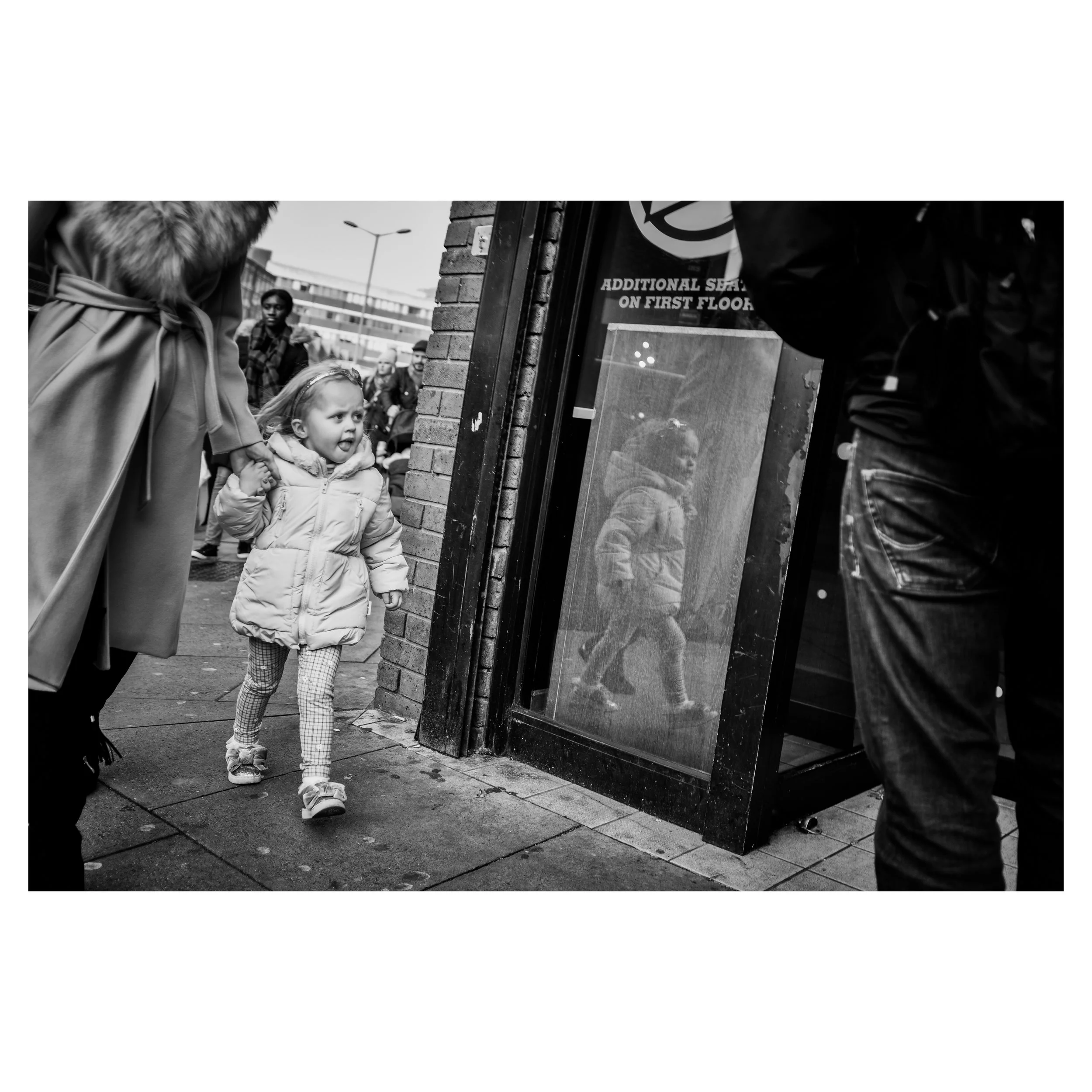
Twin.
The history of street photography is full of images of lively children - shoeless and happy playing in derelict city streets, smiling in an outsized pair of mothers shoes, carrying home the shopping or, as in Henri-Cartier Bresson’s famous shot, a bottle of red under each arm and a cheeky grin.
Look through the average street photography account on Instagram, or any other social media stream, you will be hard pushed to find the younger generation at all. Sadly, this is not surprising.
We all know why. Nobody wants to incur the wrath or worse, the stream of abuse, of an irate parent fearful that their child’s image has been stolen for all the wrong reasons. And, therefore, many of us don’t try. Those images of children not only never appear - they are never taken. A hidden generation is being created at a time when we take more photos than ever.
Yet, if you walk into any town centre, children from decades ago, now adults or well-beyond, stare out from the ranks of birthday cards in stationers and supermarkets. Pick up a book of street photography from the last century, there they are; captured for posterity like ancient insects in amber. It’s almost as though children and their beaming smiles belong to another age and the streets today are devoid of children. Anyone remember the child catcher in Chiity Chitty Bang Bang and the empty square around the castle?
Are we to become the generation that didn’t have children? Or, at least, that airbrushed or Photoshopped them out of history? We would be much poorer for it - but that’s the risk.
Of course it is about intent. Why is the photographer taking the photograph in the first place? What is it they want to show? It is this intent which raises photography beyond a simple and precise record of a scene or object - almost for classification purposes. It isn't simply a scientific practice concerned with obtaining a correct exposure through combinations of shutter speed, size of aperture and sensitivity of sensors or film. It is an art form in which the photographer expresses an emotion, idea or even just a viewpoint. Surely any photographer who takes a photograph of a child for the wrong reason or with ill intent, will produce work which sets alarm bells ringing or, at the very least, leaves a bad taste in the mouth of the viewer.
Children’s lives hugely enrich our own. They remind us of a distant past that we often hanker after. They point to a future full of potential. They provide moments of great humour - often through their attempts to be more like us, the grown ups. They possess a wide eyed sense of wonder that reminds us just how amazing our world is at times when we have grown weary of it ourselves. And photographs of children can do all of these things too. They often point to a truth that, as adults, we need reminding of.
Of course, the problem of the disgruntled and anxious parent doesn’t go away. However, we will only perpetuate the situation if we accept it. We can challenge it by taking good photos of children. If we are open and upfront about what we do then maybe the disgruntled mum or dad would recognise the same things in the image that we saw. We should be less inclined to be furtive, secretive and hidden but be prepared to share positive ‘good’ images of children on our feed. That way we can demonstrate our good intent next time we meet an anxious mum or dad. And, as with any street photograph, smile, share your Instagram or website details and offer to email them a copy. All parents think their children are the best thing since bread arrived sliced - hey; they might even ask you to take some more.
Resolutions 2019


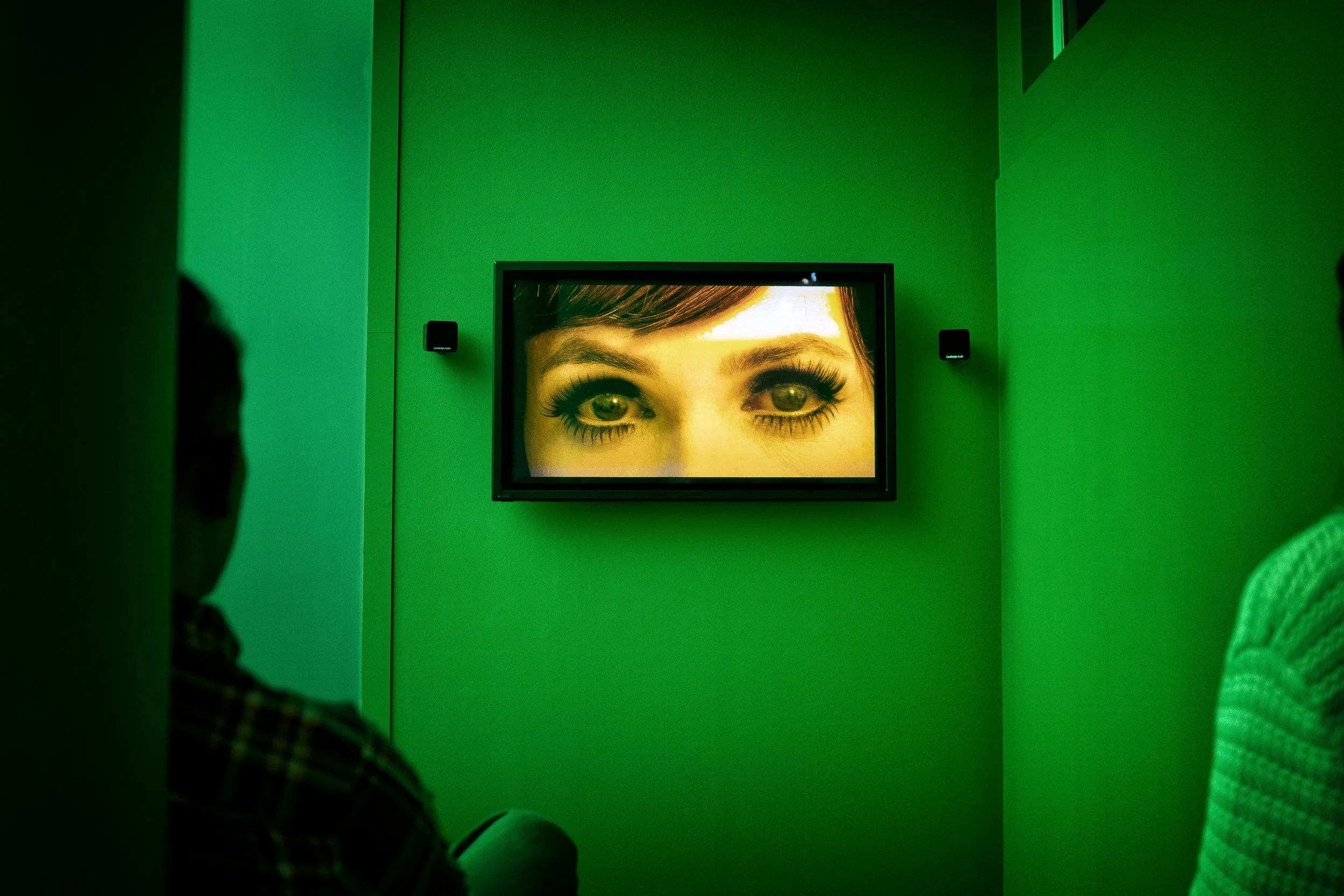


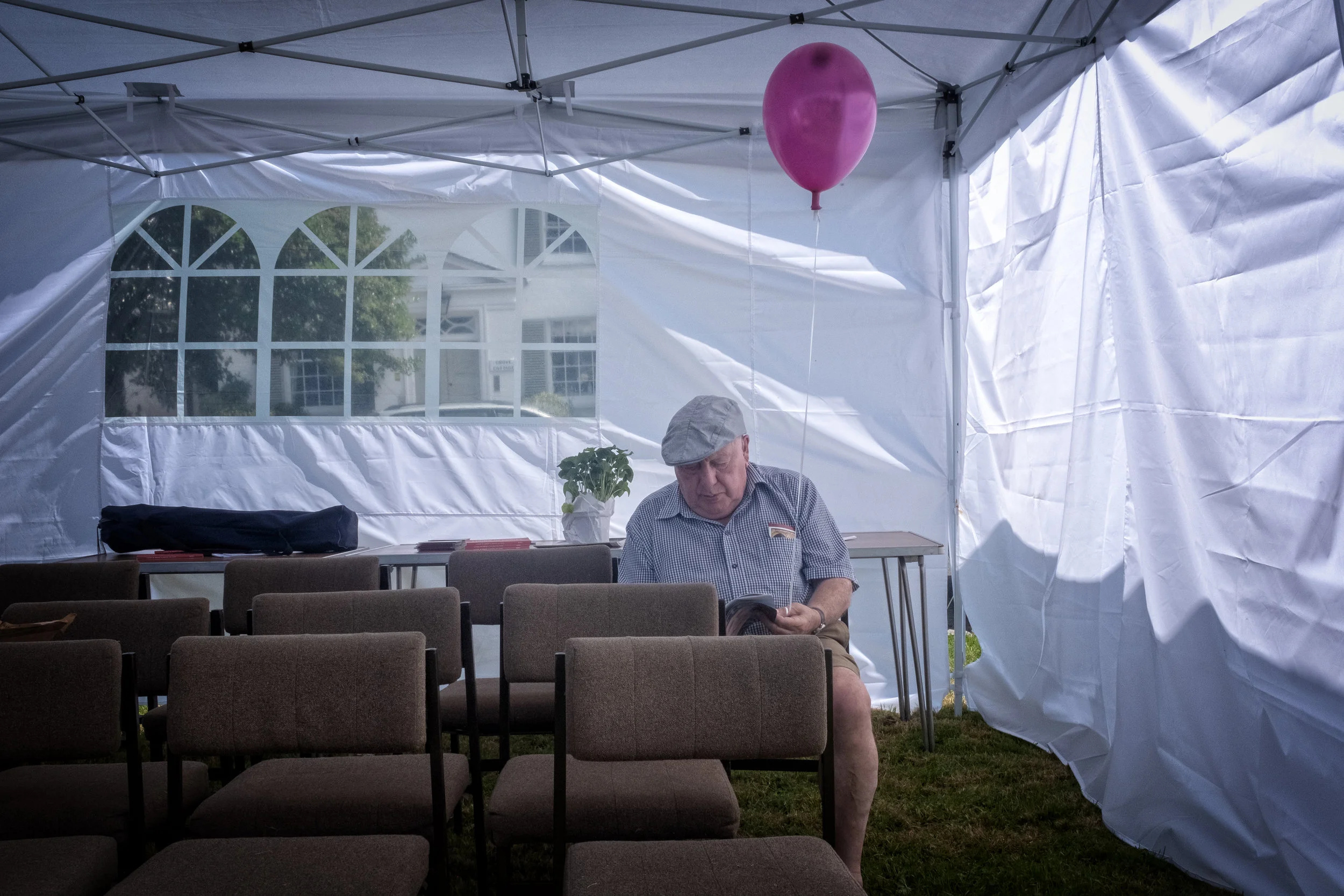

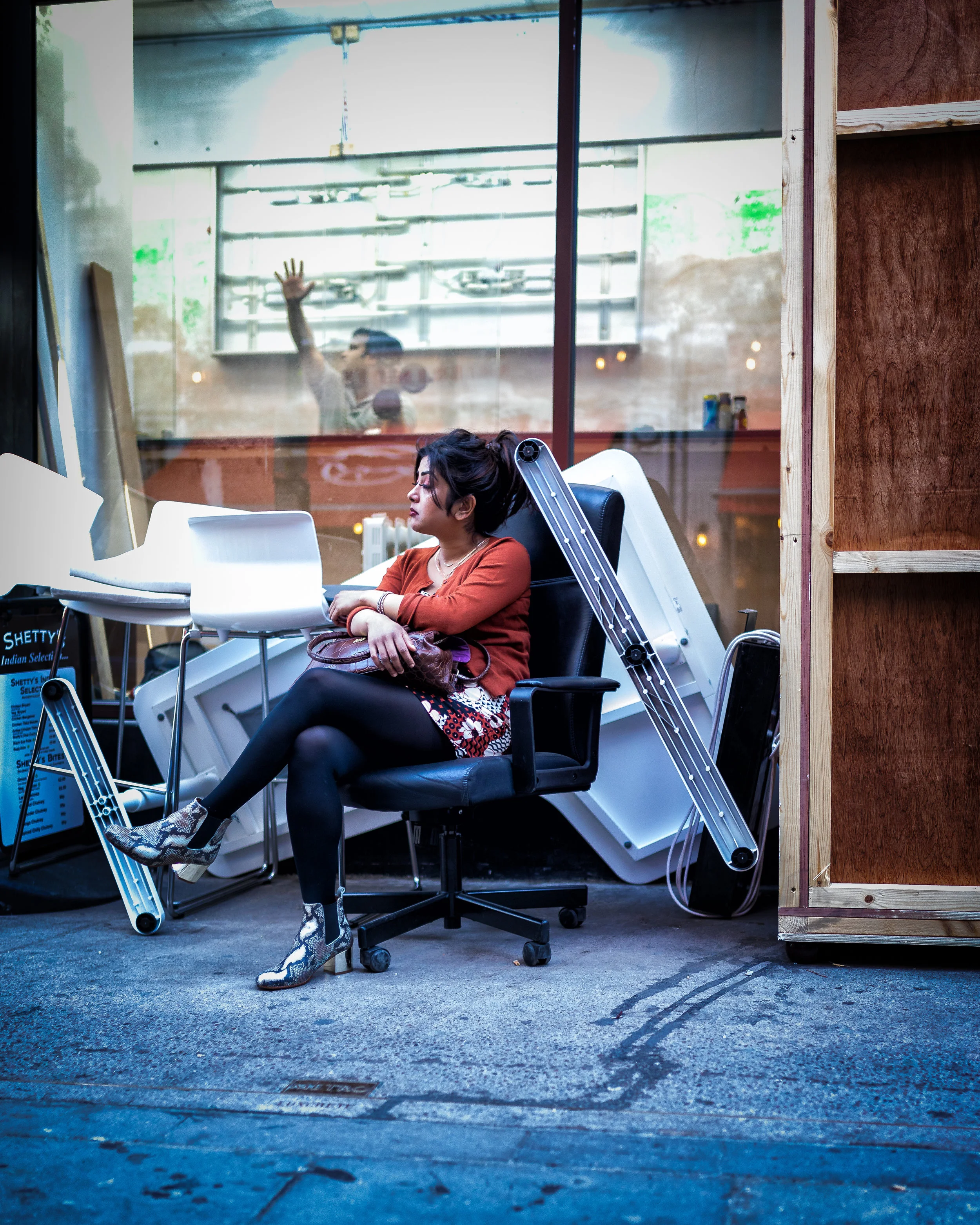


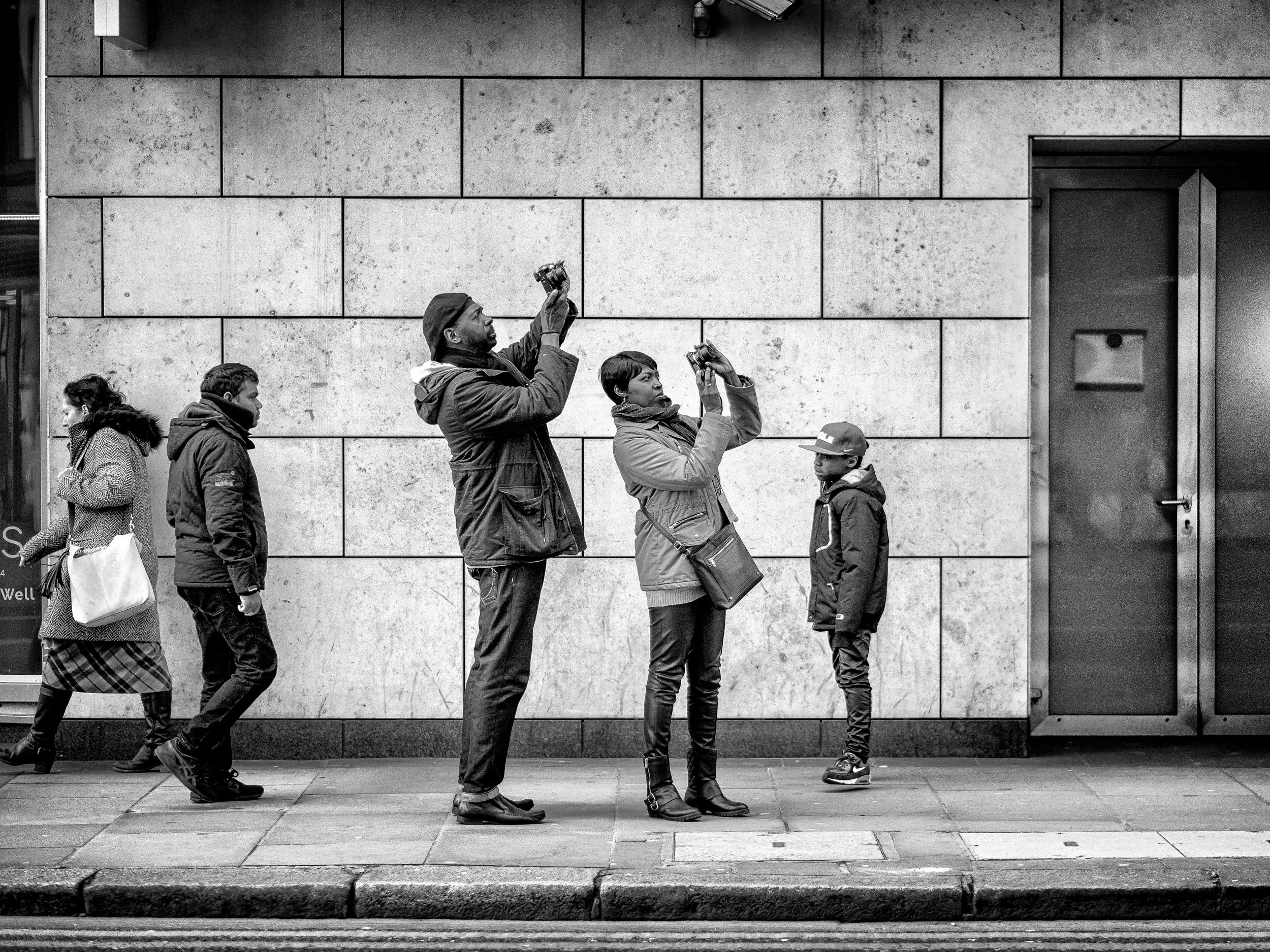

At the start of this year, that is just about to disappear around the corner, I wrote down my resolutions for 2018. I’m not a big fan of resolutions although, believe me, there is plenty to improve about me! So when I wrote them down it wasn't in a “post them on the fridge to haunt me” kind of a way. I wrote them on my blog (http://www.hughrawson.com/blog/resolutions-2018) so the whole world could hold me to account.
Actually, these weren’t so much resolutions as much as areas to develop within my photography. In that sense, these were things that aren’t just for the beginning of a new year but are development points for all year - a bit like the pet dog that’s not just for Christmas. Oh and I had no other resolutions - shoot me!
So - how did I do? Well, my end of year report, like so many of these things, would probably say “Could do better.” If I’m honest, I had to look back to see what my five resolutions were (never a good sign - except it’s a sign that I haven’t really focused on them!). But, but, but… I have made some progress on each of them. A recap…
Enter more competitions - a slight improvement here. Last year I had just entered the Sony Photography Awards - always a highlight of the year for me to see the range of images displayed at Somerset House in April. I didn’t get anywhere in that. However, I was thrilled to be shortlisted in the Street Photography category of the British Photography Awards with an image that I shot at my local village fair (moral: always carry your camera!). As a bonus, the article that Digital Photographer printed about my street photography last winter, made a reappearance in their 2018 annual.
All The Fun Of The Fair.
2. Slow down - my default was always to shoot from the hip. Breeze through a crowd, shooting away like the final scene of Butch Cassidy & The Sundance Kid, and be gone before anyone fully realised what you were up to. I still like that instinctive approach and it suits my style to move fast and move on (I get bored easily). However, I was keen to become more considered in my approach - and I have been. My default lens for street is 23mm which works well for shooting from the hip. My favourite lens, however, is the Fujinon 56mm f1.2 - great for portraits, hopeless for shooting from the hip. The focal length is just too long - it’s all hit and miss and mostly the latter. So, I have taken the 56mm out with me, especially at night, and actually stood still to frame up and enjoy taking the time to compose. It works.
3. Get to know my camera better - probably the area I’ve done least well on. I know what I need and rarely venture beyond it. I can find my way around those limited areas pretty well by feel but pose me a more tricky question and I break into a cold sweat. One major achievement was to actually get round to setting up My Menu in the camera settings. I now have easy access to those things I use most often - that’s good. So I’ve got faster at doing the things I was already fast at! Erm?
4. More subtle colour processing - definitely improved here. I think, as much as anything, I’ve become a better self-critic and have developed a keener eye. I do enjoy the processing side probably as much as taking the photos, but have always been pretty heavy handed. I like my tastes strong - coffee, whisky, music, you name it - I’m just not a beige latte kind of gent. However, this meant that I was always overdoing the saturation, the contrast, and, particularly, the clarity (so, so tempting) until the shot was ruined. I just didn’t know it. A year ago, I was most pleased with my black and white images. This year there are fewer mono shots on my feed or my website. My colours have improved. They’re more subtle and are better for it. Less is more. Definitely.
Bus Heads.
5. Keep on keeping on - taking the shots I want to take. It’s very easy to be swayed by what brings in the most likes on Instagram or whatever social media you pay attention to. All of these things have fads and trends. And some of them are great - for a while. It’s never a bad thing to dabble in those waters. Get your feet wet and see what sticks as you continue to develop your own style. I know that when I do shoot the photos I want to take, that my style will resonate. Not someone else’s. And usually they are the photos that get the best comments and the most likes - and for all the right reasons. I’m pleased that I’ve shot for me this year and it has worked. I have a set of photos that I can be proud of and that say something about me. I still have so far to go...
So what about next year, you ask? And quite rightly.
Always, slow down - this should become my mantra. A re-enty from last year’s resolutions and straight in at number one. It’s that important to me. Fundamental. I am good at anticipating what is going to happen and I need to be quick to be in the right place. But sometimes, as I have learned, I also need to take my time. I did this a bit this year but going forward I am going to be more considered in my photography.
Strip back - carry less. I am a sucker for “take it just in case” syndrome. What if such and such a scene appears and I haven’t got the right lens? I nearly always end up carrying a spare lens and even another camera. Sometimes it gives me an extra flexibility but it also hampers me in moving about. To be honest, none of the kit is that heavy and the bag is only small - but it’s still a bag. It’s still stuff. I love the idea of moving swiftly through the city, camera in hand, and only a jacket pocket to keep it in. If that! It doesn’t happen often enough. Sticking to one focal length would put an end to dithering around with kit and potentially missing other shots. And, as a bonus, I’d get to really know that lens.
Travel more - I often read advice that says the best investment for your photography is travel - not kit. I am sure this is right. New places really open your eyes. For me, this doesn’t just mean travel abroad but I feel that I have become very parochial in my street photography. This year, I have found myself defaulting to London, and not just London but small areas around Mayfair and Soho in London. It would freshen things up to stay an extra few stops on the tube - or take a different line. Or even find out if there is anywhere outside London… answers on a postcard in orange crayon please.
More time on exhibitions and books - less time online. The recent iOS update for Apple allows me to see how long I spend online each day. Terrifying. I can resolve some of this as “working” on my website/social media presence/photo editing. I also know that vast swathes of my day can disappear when I have what I feel is an odd moment to "just check” - an odd moment that soon becomes half an hour. How much better it would be to spend that time looking at published photographers’ work in books or exhibitions. I’m not a social media hater who secretly uses it in my spare time. And I am aware of how valuable Instagram, for example, is as a tool for photographers today. However, there really is nothing like the look of an image in print in a book or framed large in an exhibition. We learn so much from the work of others. Yes, the internet gives us that easy access, but it’s also too easy to just browse through and flick by. Books and exhibitions force us to really look. I mean REALLY LOOK.
Get out more at night - yeah, I have a day job. And I get tired. Heck, it’s demanding, all right?You’d be tired too… And all that. But I have evenings that just get frittered away when, with a little effort and thought (thought and effort), they could be spent being creative on the streets, improving my skills, doing the thing I love. Do it Hugh.
Variety Pack - there isn’t much variety in my pack at the moment. It’s pretty much all street. Don’t get me wrong - that’s what I love. But photography is photography is photography… and any kind of photography is going to help with every other type of photography. How about some landscape, portrait, travel shots? How about really getting your head around flash photography this year? I’d be very satisfied to have that in my armoury in 2019.
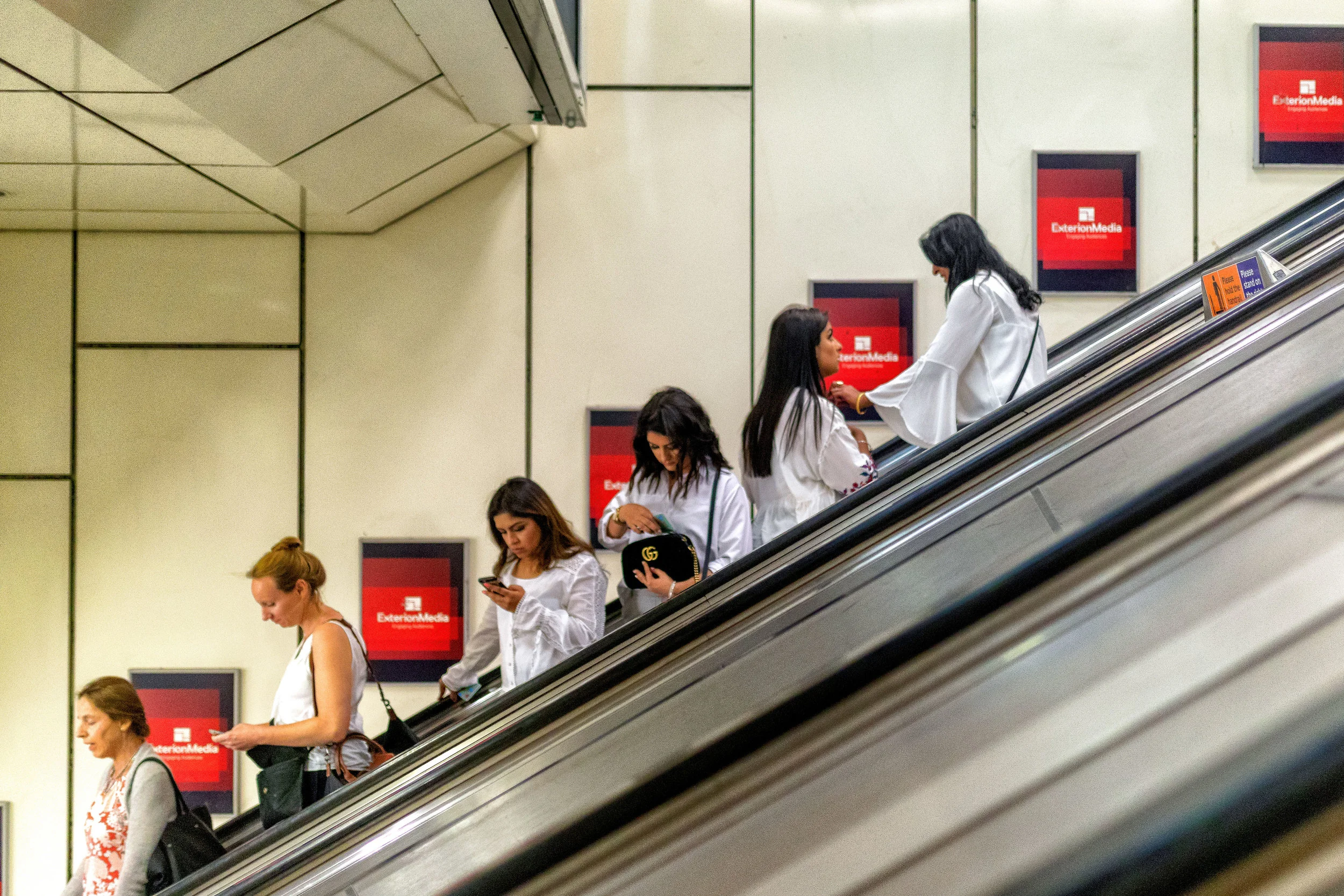
Escalator Choir
I’d love to hear your thoughts, tips, advice and recommendations as well as any thoughts on your own resolutions for the year ahead.
Thanks for all of your support this year - it brings so much encouragement and inspiration.
Have a great 2019!
Hugh