

Photobooks - what you told me....2019
The end of another year is always a good time to reflect. Amidst all the pre-Christmas talk of gear and new products, I would always put in a big shout for the importance of photobooks. Anytime is always a good time to stop and pick up a photobook. Other people’s images feed us. They will probably improve our photography far more than new equipment – they’ll certainly give you more bang for your buck. If you think about it, every time we click that shutter, we are bringing to bear the total of our experience and learning up to that point. Everything that has gone before helps us frame that image so if we can educate our eyes with the best quality images then we are in a better position to take that amazing shot.

Some of your recommendations
I am always on the lookout for new photobook suggestions so I turned to social media (Instagram and Twitter) to find out what my followers have been enjoying this year. Importantly, I did not specify that the book needed to have been released in 2019, or even that it had to be available (sadly some of them are hard to find) – just a book that had been enjoyed this year. Consequently, most books are of some age and reputation; after all, we have a photographic history stretching back over 150 years. What has gone before carries significant weight, whereas the shock of the new takes time to kick in, for the word to spread and for true worth to be recognised. Finally, on the suggestions, although my following is mainly street photographers, I did not specify any particular genre of photography. We should have open minds and learn from every genre, recognising quality when we see it.
Some photobooks are very difficult to track down. Long sought after books by Fan Ho, W.Eugene Smith, and Tony Ray-Jones, to mention a few, are still very much on my “hope to find” list. I know from bitter experience that photobooks are usually on a limited print run and if you aren’t quick with your shopping basket they will disappear forever – or at least move to the super-expensive used books pile. I can only comment on books I have physically had contact with.
If I had to choose one book that stands out for me this year, I’d pick two! Firstly, The Street Philosophy of Garry Winogrand by Geoff Dyer – I’ve long admired Winogrand’s work and this is a sumptuous, large (heavyweight) retrospective. Coupled with Geoff Dyer’s always insightful words (if you haven’t come across him try The Ongoing Moment about photography or But Beautiful about jazz) it’s a magnificent book.
My second choice is a compilation album – the ideal quick pick up by the bedside, bath or loo! David Gibson’s Street Photography: A History in 100 Iconic Images. As you would imagine, it takes 100 images by 100 different photographers, in chronological order from 1904 (Edward Steichen’s remarkable image of The Flatiron – complete with evening lights and top-hatted carriage drivers) to 2017 (Alessandra Sanguinetti’s image of five girls taking a group selfie). Each image is accompanied by a page of David’s excellent analysis and background to each image.
The list that follows contains the recommendations I received. It’s a great list; many I know, many I will hopefully get to know – and some I can only hope to get my grubby hands on.
There is no logic to the order in which they are listed; it is simply the order in which I received them, over two days on Instagram and Twitter. A huge thank you to everyone that made a recommendation or two; you are credited at the bottom of the page. Please do check out their online galleries as well as the books listed.
All of the books that I could find available on Amazon are listed here on "Books You Recommended" on my Amazon street photography page.
The list:
Alex Webb - Brooklyn
London Underground 1970 -1980
Humans of New York - Brandon Stanton
Gregory Heisler - 50 Portraits
Masahisa Fukase - Ravens
David Lurie - Images of Table Mountain
Stephen Leslie - Sparks
Tom Wood - Bus Odyssey
Siegfried Hansen - Hold the Line
Jeff Mermelstein - Sidewalk
Gus Powell - Company of Strangers
Fred Herzog - Modern Colour
Jonathan Higbee - Coincidences
Bruce Davidson - Subway
Raymond Depardon - Glasgow
Dawoud Bey on Photographing People and Communities: The Photography Workshop Series
Jane Bown - A Lifetime of Looking
Vivian Maier - Street Photographer
Peter Lavery - Circus Work
Shomei Tomatsu - Chewing Gum and Chocolate
Saul Leiter - Early Colour
Saul Leiter - Early Black and White
Richard Sandler - The Eyes of The City
Don McCullin - Tate retrospective
Sebastião Salgado - Genesis
David Solomons - Up West
Nan Goldin - The Ballad of Sexual Dependency
Jill Freedman - Jill’s Dogs
August Sander - People of the 20th Century
Anton Corbijn - The Living and the Dead
Friedlander by Peter Galassi
Robert Frank - The Americans
Stanley Kubrick Through a Different Lens
Susan Sontag - On Photography
Trent Parke - Minutes to Midnight
Anders Petersen - Soho
Jim Mortram - Small Town Inertia
Sohrab Hura - The Coast
Erwin Olaf - I am
Todd Hido - Intimate Distance
As always, I’d love to know what you think and if you have any suggestions of your own please just add them in the comments below.
Thanks all.
Credits:
Thank you to the following on Instagram:
@kyun.pic
@jenslookingglass
@fabiennehanotaux
@nicofroe
@alwayschasingdaylight
@neilwaybright
@laserkola
@mark_lev_photo
@chris_eley
@abitpedestrian
@stevereevesdirector
@huwjohn_uk
@zenostr33t
@streetlyspeaking
@williamhpearce
@ashsmithone
@venus_lumieux
@tripsonstreet
@bastianromanpeter
@samantha_french_
@streets.and.stories
@j2.bee
@timwadham
@simonking_v
And on Twitter:
Kim Aldis @ThatPhotoBloke
Dave Webb @PhotoWebb
Sarah Marston @Sarah13Marston
Ed Robertson @eddrobertson
Book Review - "Street Photography Is Cool" by John Lewell
John Lewell is a name that may be familiar to some of you as the founder of the Streetphotoindex and of his own top ten UK listed blog at www.johnlewellphotography.com
John recently published his own eBook entitled Street Photography is Cool – and it is available on Amazon.

John is an extremely erudite writer, as you would expect from a Cambridge graduate, who is both well read and well travelled. He demonstrates great knowledge of many aspects of art and culture, and this informs both his own photography and his views on shooting on the street.
This is not a “how to” book but is more a walk through many of John’s thoughts on different aspects and challenges of shooting on the street, using his own images as examples. Each chapter begins with a reason - “street photography is cool because…” much in the style of the “Love is…” Schultz cartoons that so many of us will have grown up with.
From the outset John is keen that street photographers should develop their own style, putting down the manual and getting out and shooting as much as possible. He acknowledges that he is largely self-taught, eschewing the influence of the “greats” in order to develop his own style.
“Once other photographers have shown us how they see the world we start to see it in the same way. That's why I didn't start to look comprehensively at other people's work until I'd developed a style of my own.”
John acknowledges that street photography is not easy. “Without intense desire and motivation no one can succeed as an artist.” He picks his way through a lot of the challenges that will be familiar to anyone who has tried to shoot candid images on the street and illustrates these with analysis of images from his own back catalogue. These insights are reassuringly familiar and will resonate loudly. John has clearly considered these issues at length and over time. However, they are very personal views.
At some points in the book I felt urged to debate some of the points that John made. His writings are fairly black and white (pardon the pun) on certain issues – particularly concerning black and white photography, for example. In “It's a Colourful World” he writes:
“I'm still puzzled why so many people still cling to black & white, given today's versatile and sophisticated colour tools. I can only put it down to their reluctance to embrace change: a deep obstinacy rooted in habit and tradition.”
To me, this misses the point entirely. Black and white is a tool at the photographer’s disposal which, given that the two dimensional image (the photograph) is already an abstraction from the reality of 3d, allows a further level of abstraction and expression.
On developing a personal style John writes:
It's far better to allow your style to grow out of your interaction with reality. It will come naturally from your selection of subjects, from how sympathetic you are to them , from your distance or closeness to them , and from whether you can find a little bit of originality in the way you portray them . I think originality in art is vastly overrated and has led to all kinds of unnecessary and ultimately sterile disruptions. The " little bit of originality " of which I speak is to be glimpsed in your personal style. It's what comes from the photographer in response to reality, rather than from anywhere else.
This is very much a matter of opinion, as is any subjective evaluation of any work of art. However, I was surprised that John, with all of his cultural acumen, seeks to encourage photographers to seemingly seek to operate in a vacuum of their own work. To me, it is about learning from those who have gone before, from their successes and their mistakes, and seeking to take the elements that we, as individuals, most like from each of these giants upon whose shoulders we plant our tripods. Similarly, we should seek to be influenced by as wide a range of cultural and artistic experiences, not purely photographic, as possible in order to broaden our creative vision. John has such a cultural wealth at his fingertips that I was most surprised to read his thoughts on this.
I was particularly struck by John’s thoughts on the future of street photography at a time when private and public identities have never been so mixed. He warns:
“Eventually, a database of street photos may itself be tied in with tags on social media , enabling us to identify the majority of people we photograph on the street . Tomorrow, everyone will be in the public eye . When all is revealed by face recognition technology I wouldn't be surprised if street photography were not outlawed altogether in many countries. Either that, or people will take to wearing masks and camouflage.”
He recognises the responsibilities that we have as photographers on the street and shares views on shooting courteously and within the law. He gives tips on the importance of limbering up for a day on the street, ensuring that you are in:
“…the right frame of mind to take street photos . That's because you need to be able to see beyond the obvious, to find the extraordinary in the ordinary , and to anticipate the next few moments almost as though you can see into the future...”
This is so true.
In the main, John represents the world of the street photographer well.
“Every true street photograph represents a unique occurrence, captured in a moment of time that can never be repeated . You were its witness; and your photo , however ill composed or badly taken , will have intrinsic value of its own .
Self- publication is very much easier today than ever before. John explains
“I've used only my own photos to illustrate the various topics. Although restricting the book in this way probably gives it stylistic coherence, it doesn't acknowledge the rich variety of approaches taken by contemporary photographers.”
It would be interesting to sit down (with a bottle of wine or a couple of pints of ale) with a dozen images taken by the street photography greats or, indeed, those of contemporary photographers, and discuss our various opinions.
Like all good books, Street Photography Is Cool raises plenty of arguments and generates even more discussion. John has done well to publish a work that so clearly puts forward his views as he walks us through his images.
Photobooks - a personal list
Everyone loves a list.
The desert island game is one I will willingly play from time to time - especially with music. Although choosing only ten tracks or pieces from a lifetime of passionate listening often seems as futile as it is impossible - moods shift, needs change and new things come along. The same applies to photo books. A new one is almost automatically elevated to favourite status and, if it’s not, then the purchase is always slightly tinged with regret.
So, which would you take? No fixed limit to the number of books but let's assume that your travel is not in some kind of mobile-library(!) so that there is some implied limit.
I started by imagining a top ten. I then asked my instagram followers for their favourites. This brought me a few familiar ones and some new books that I look forward to discovering. It also threw up the question of which books qualify - I had been thinking about books by one photographer. However, there were some really strong mentions of books about photography and some collections too
This first blog is going to focus on books by single photographers, leaving space for compilations (for want of a better word) and guides in future blogs.
I should also say that I am simply listing the book without a review. If you want to see what they’re like for yourself then there are plenty of places to look online or in bookshops.
So.. here we go. Click on the image for a link to buy online.

The Suffering of Light
Alex Webb
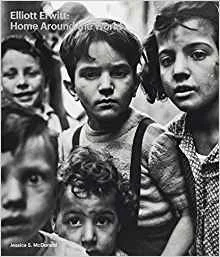
Home Around The World
Elliott Erwitt
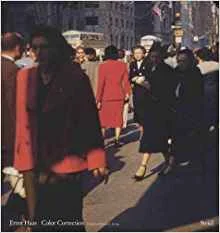
Colour Correction
Ernst Haas

Modern Color
Fred Herzog

Twilight
Gregory Crewdson

Valparaiso
Sergio Larrain

Henri Cartier Bresson
by Clement Cheroux

Youth Unemployment
Tish Murtha

Early Color
Saul Leiter

The New Yorkers
Robert Herman
Honourable mentions to Anders Petersen, Marc Riboud, Mark Neville’s “Fancy Pictures,” and the sheer gorgeousness of Sebastiao Salgado’s use of deep blacks in his monochrome images.
If your favourite is not listed, I’d love to hear from you. Like or comment below.
Til next time.